Uncategorized

byteway ai receptionist for trades
Uncategorized

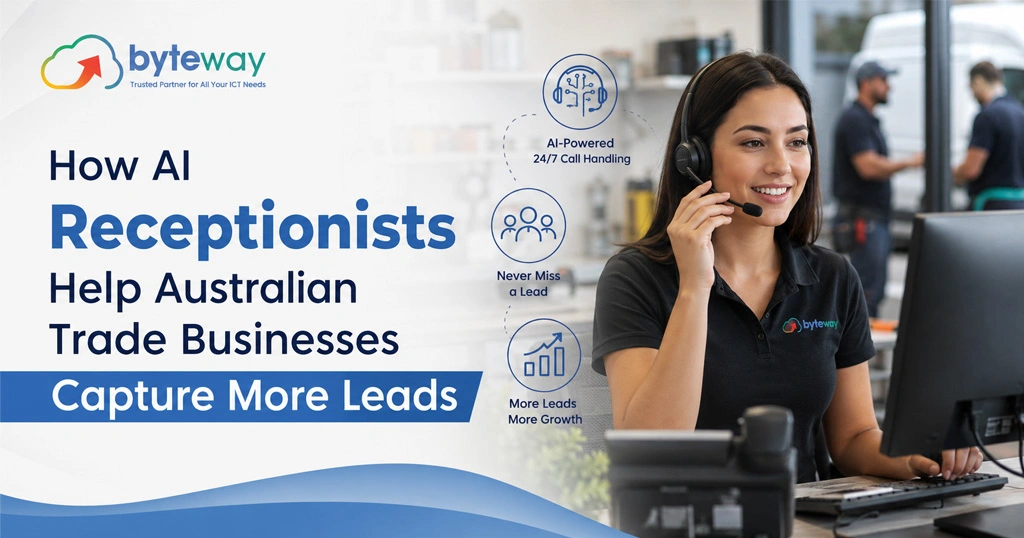
How AI Receptionists Help Australian Trade Businesses Capture More Leads?

Byteway helps Australian trade businesses stop losing work to the phone, and for a tradie, that is often the single biggest hidden leak in the business. Every call you cannot answer while you are on the tools is usually not a message, it is a lead that just rang your competitor instead. An AI receptionist answers those calls, captures the lead, and books the job, so the enquiries you are already paying to generate actually turn into work. Here is how it captures the leads a busy trade business loses. Why trades businesses lose leads to the phone The problem is structural, not a failing on anyone’s part. In a trade business, the people who would answer the phone are the same people doing the work, under a house, on a roof, driving between jobs. So calls go unanswered, and here is what the data says happens next: most callers who reach voicemail hang up without leaving a message, and most do not call back. They simply ring the next business on the list. That means a missed call is rarely a deferred lead. It is a lost one. And it is worse than it looks, because the calls you miss are not spread evenly, they cluster when you are busiest, which is exactly when the most work is coming in. Every tradie has lost jobs this way without ever knowing it happened, because a lost lead leaves no trace. Speed is what actually wins the lead There is a second, less obvious reason missed and delayed calls cost so much: whoever answers first usually wins the job. Research on how businesses respond to leads has consistently found that answering within a few minutes makes you far more likely to win the enquiry than responding even half an hour later, and most businesses take far longer than that. For a tradie who calls back that evening after the job is done, the work is often already booked with whoever picked up first. An AI receptionist changes this completely, because it answers instantly, every time. The lead that would have gone to voicemail, or waited hours for a callback, is captured and often booked on the spot, before a competitor gets a look in. In a trade where speed decides who gets the job, never missing a call is a genuine competitive advantage. How an AI receptionist captures the leads you’re losing? It answers every call, instantly, day and night. No lead hits voicemail, because there is no voicemail. Every caller reaches a helpful voice on the first ring, including after hours and on weekends when a big share of enquiries and emergencies come in. It captures the details you need. The agent takes the caller’s name, number, address and the nature of the job, so even when it does not book on the spot, you have a complete lead to follow up, not a missed-call number. It qualifies the lead. It asks the right questions, what is the job, where is the property, is it in your area, so the leads that reach you are the ones worth having, and time-wasters are filtered before they reach your phone. It books the job. Connected to your calendar, the agent can offer times and book the job directly, turning a lead into confirmed work without you touching your phone. A captured lead becomes a booked job while you are still on site. It covers after-hours, when competitors don’t. A large share of trade enquiries come outside business hours. While competitors let these go to voicemail, an AI receptionist books or captures them, winning leads other tradies never even see. We cover the full mechanics of how this works, including integration and setup, in our guide to AI voice agents for trades and field services. This piece is about the leads, and the point is simple: every call captured is a lead you would otherwise have lost. What captured leads are worth The maths is worth doing. Take the calls you miss in a week, the share that were genuine job enquiries, and your average job value. Even a handful of captured leads a week that would otherwise have gone to a competitor adds up quickly, often to far more than the cost of the AI receptionist. For most trade businesses, this is not a productivity nicety, it is recovered revenue you are currently handing to whoever answers their phone faster than you can. The Honest Ppart An AI receptionist is not a magic lead generator. It does not create demand; it captures the demand you already have and are losing at the last step. It also needs to be set up well, connected to your calendar, tuned to your trade, with a path to reach you for anything complex, to work as a real booking tool rather than a gimmick. And it should extend you, not wall customers off, so anyone who needs a person can reach one. Set up properly, though, it captures leads you are provably losing right now, which is about as close to found money as a trade business gets. Byteway Expert Insight When we show a tradie what a week of their missed calls actually looked like, captured and booked instead of lost, the reaction is usually a mix of surprise and mild frustration at the jobs that got away. They were never losing leads because their work was not good enough or their marketing was not working; they were losing them because they physically could not answer the phone with their hands full, and the lead went to whoever could. That is a solvable problem. Our approach is to set the AI receptionist up as a lead-capture and booking system, connected to how the business actually runs, so the calls that were quietly walking to competitors turn into booked jobs instead. For most trades, it is the highest-return thing they can do, precisely because the leads are already there. How Byteway helps Stop handing your

Uncategorized

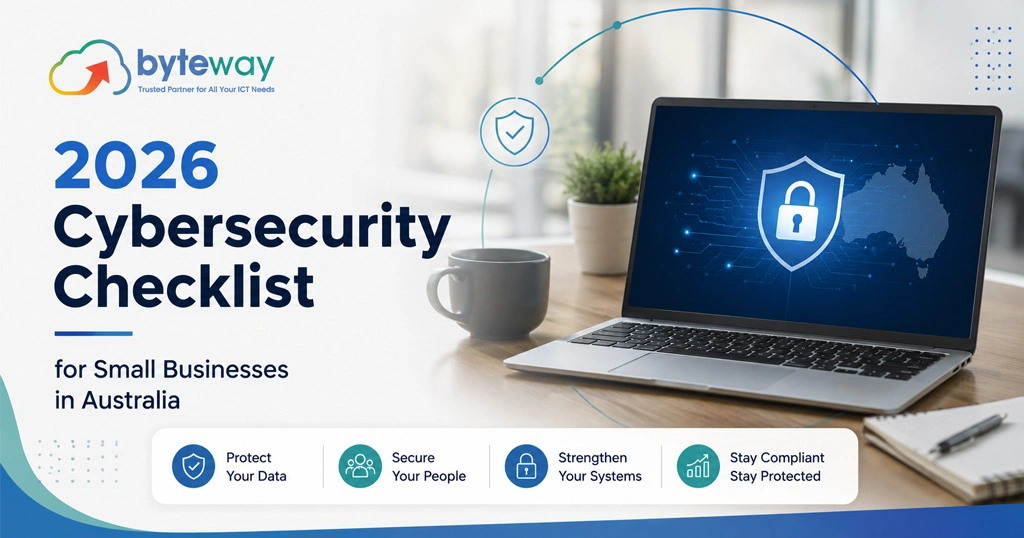
2026 Cybersecurity Checklist for Small Businesses in Australia

Byteway helps Australian small businesses protect themselves from cyber threats, and going into 2026 the case for doing so is blunt: the Australian Signals Directorate reports that the average self-reported cost of cybercrime for a small business has climbed to around $56,600 per incident, and attackers increasingly target smaller businesses precisely because their defences tend to be weaker. The good news is that most attacks are stopped by a manageable set of fundamentals. This is a practical 2026 checklist to work through, grouped so you can start today. Why 2026 raises the stakes? Two things have changed the picture for small businesses. First, cybercrime has industrialised, and AI has made scams far more convincing: phishing emails now have perfect grammar, and criminals use voice cloning and deepfakes to impersonate suppliers and even directors, so the old “spot the typo” advice no longer works. Second, the cost and consequences have risen, with the ASD reporting the average small business incident now costs tens of thousands of dollars, before counting downtime and lost trust. Attackers use automated tools that scan for any vulnerable business regardless of size, so “we’re too small to target” is no longer a defence, if it ever was. The checklist Work through these in order. The foundations first, then people, then resilience, then the framework that ties it together. Foundations: the technical basics Turn on multi-factor authentication everywhere- This is the single highest-impact control, and it is free. MFA means a stolen password alone cannot get an attacker in, which shuts down the most common attack. Apply it to email, banking, and every business system, starting with the accounts that matter most. Back up your data, and test the restore- Tested is the key word. A backup nobody has ever restored is an assumption, not a safety net. Automated cloud backup that you have actually restored once is what turns ransomware from a disaster into a recovery. Patch promptly, and get off end-of-life software- Attackers scan for known vulnerabilities that already have fixes. Apply updates to operating systems and applications promptly, and replace software that has reached end of life, such as Windows 10, which ended support in October 2025, because unsupported software stops receiving security patches entirely. Control who can access what- Give staff access only to what they need, remove access promptly when people leave, and limit administrator rights. Overgrown access and lingering logins from departed staff are common, avoidable weaknesses. Secure your network and devices. A business-grade firewall, secure Wi-Fi, and protection on every device (endpoint protection) close off common entry points that a home-grade setup leaves open. People: your front line Train staff on AI-era scams- Your people are the front line, and the threats they face have changed. A short, current session on how modern scams work, AI-written phishing, voice cloning, and payment redirection fraud, where a fake invoice diverts a payment, prevents the compromises that start most incidents. Teach the behavioural red flags: urgency, secrecy, and unusual payment requests. Verify payments and bank-detail changes independently– Make it a rule that any change to payment details is verified by phone on a number you already have, never one from the email. This single habit stops the payment fraud that costs Australian businesses heavily. Resilience: for when something happens Write a simple incident response plan- Know in advance who to call, who decides, what to disconnect, and where your backups are. A one-page plan turns a crisis into a managed process, and helps you meet any breach notification obligations under the Privacy Act. Get cyber insurance ready– Cyber insurers increasingly require MFA, tested backups and documented patching as minimum conditions for cover. Having these in place is both good security and what keeps you insurable, so treat the checklist above as your insurance readiness too. Framework: tie it together with the Essential Eight Work towards the Essential Eight- The Essential Eight is the Australian baseline of eight mitigation strategies, and most of this checklist maps directly to it. Reaching Maturity Level 1, done properly, stops the majority of common attacks and is achievable for a small business. It gives structure to the list above and a clear path to improve, and it is increasingly what insurers and larger clients expect to see. The one most businesses miss: accountability Make someone responsible- The reason small businesses fail at security is rarely the cost of tools; it is that nobody owns the pile of small, boring decisions that add up. Name a person (internal or your IT provider) whose responsibility security is, and make sure everyone knows who that is. Without ownership, the checklist gets started and never finished. Byteway Expert Insight The pattern behind almost every small business breach we see is not a clever attack; it is an ordinary one landing on a business that never finished the basics. The MFA that was on email but not the finance system, the backup nobody had tested, the patch that was six months late, the staff member who was never taught what a modern scam looks like. Every item on this checklist is unglamorous, and together they stop the large majority of what actually happens. Our advice to any small business is to work down this list in order, get the foundations solid before anything fancy, and put one person in charge of finishing it. That, more than any expensive tool, is what makes the difference between a business that has an incident and one that quietly does not. How Byteway helps? Get your small business secure for 2026 Most breaches happen to businesses that never finished the basics. Byteway assesses your small business against this checklist and the Essential Eight, then closes the gaps in priority order, without an enterprise budget. Book a small business security assessment. Frequently asked questions What should be on a small business cybersecurity checklist for 2026? Multi-factor authentication, tested backups, prompt patching and getting off end-of-life software, access control, staff training on AI-era scams, payment verification, an incident response

cloud backup melbourne
Uncategorized

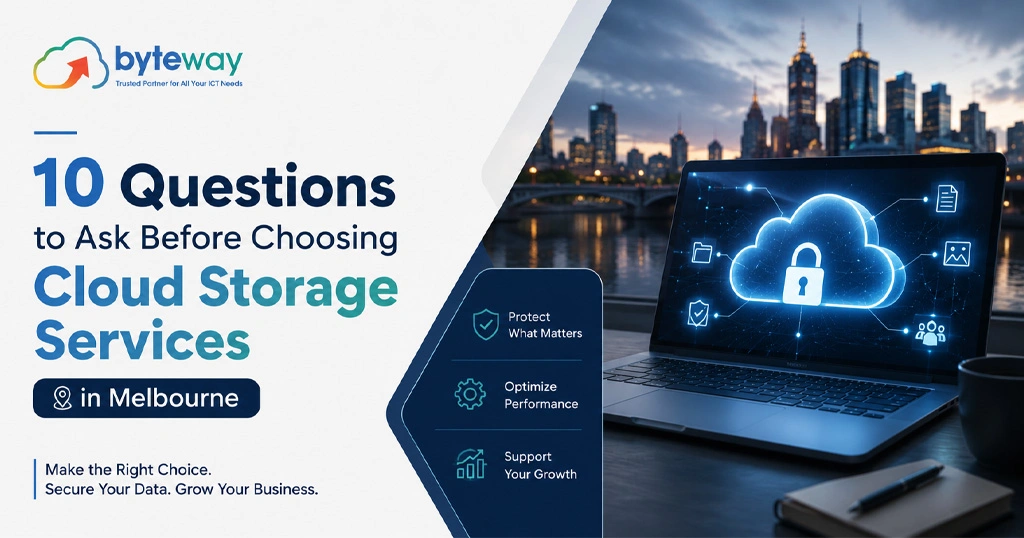
10 Questions to Ask Before Choosing Cloud Storage Services in Melbourne

Byteway helps Melbourne businesses choose and set up cloud storage that is secure, compliant and actually fits how they work, and the decision matters more than it looks. Cloud storage holds your business’s most important asset, its data, so choosing on price or brand alone is how businesses end up with data in the wrong country, a service they thought was a backup but is not, or a bill that balloons as they grow. These are the ten questions to ask any provider before you commit, and why each one matters. The short version, before the detail: before choosing cloud storage, find out where your data is actually stored and under which country’s laws, whether it is encrypted, whether it is genuinely a backup or just storage, how access is controlled, whether it meets your compliance obligations, what it really costs to scale, how reliable it is, how it integrates with your work, and how easily you could leave. The right cloud storage for a Melbourne business is secure, Australian-appropriate for data sovereignty, and matched to your needs, not just the cheapest or most familiar name. 1. Where is my data actually stored? This is the first question, and many businesses never ask it. Your data physically lives in a data centre somewhere, and for an Australian business, whether that somewhere is in Australia matters. Data stored offshore can be subject to foreign laws and access. For a Melbourne business, especially one handling personal, health or financial information, storing data in Australian data centres reduces risk and simplifies compliance. Ask exactly where your data will be stored, and get a clear answer. 2. Who can access it, and under whose laws? Here is the subtle point most guides miss: data residency is not the same as data sovereignty. A service can store your data in Australia while still using offshore support teams, overseas subprocessors, or offshore backups, which means people in other countries, under other laws, may be able to access it. Ask not just where the data sits, but who can access it and which legal jurisdiction ultimately governs it. That may be acceptable, but only if you know and have agreed to it. 3. Is my data encrypted, at rest and in transit? Encryption is the baseline protection for stored data. It should be encrypted both when it is sitting in storage (at rest) and when it is moving to and from your business (in transit), so that even if it is intercepted or accessed, it is unreadable. Strong encryption is standard among good providers, so its absence is a red flag. Ask specifically about both, not just a vague “your data is secure.” 4. Is this storage, or is it also backup? This confusion costs businesses dearly. Cloud storage, where your files live and sync, is not the same as backup, which is recoverable copies kept separately. If files are deleted, corrupted or hit by ransomware, storage that simply syncs the change is not going to save you. Many businesses assume their cloud storage is their backup, and discover otherwise at the worst moment. Ask whether you have genuine, separate, recoverable backup, because you need both. 5. How is access controlled? Your data is only as secure as who can reach it. Ask how access is managed: is multi-factor authentication enforced, can you set permissions so people only see what they should, and can access be revoked instantly when someone leaves. Loose access controls are one of the most common causes of data exposure, and good cloud storage makes tight control easy. 6. Does it meet my compliance obligations? Depending on your industry, you may have specific obligations for how data is stored and protected. Businesses covered by the Privacy Act must take reasonable steps to secure personal information, and sectors like healthcare, legal and finance carry heavier duties. Ask whether the storage meets your obligations, including data location and security, so your storage choice does not become a compliance problem. 7. What does it really cost to scale? Cloud storage pricing looks simple until you grow. Ask how pricing works as your data and team expand, and watch for the costs that do not appear on the headline price: charges to retrieve or move your data (egress fees), per-user add-ons, and tiers that jump sharply. A cheap plan that becomes expensive at scale, or penalises you for accessing your own data, is not the bargain it looks like. 8. How reliable is it, and how fast can you recover? Storage you cannot reach is useless, and data you cannot recover is lost. Ask about uptime, and for anything you back up, about recovery: how quickly could you get your data back, and how much might you lose in a worst case. Ask too about protection against ransomware, such as immutable copies that cannot be altered or encrypted by an attacker. Reliability and recoverability matter more than raw capacity. 9. How well does it fit how we actually work? Storage has to work with your business, not against it. Consider how it integrates with the tools you use, such as Microsoft 365 or Google Workspace, how syncing performs, and whether large files move smoothly given real-world internet upload speeds. Storage that is awkward to use, or slow with your files, quietly costs productivity every day, so fit matters as much as features. 10. What happens if we want to leave? Finally, the exit. Ask how easily you could move your data out if you changed providers, in what format, and whether there are barriers or fees. A provider confident in their service makes leaving straightforward; one who makes it hard, or holds your data in a way that traps you, is a risk. Your data should always be genuinely yours, portable and under your control. Byteway Expert Insight The two mistakes we see most in Melbourne are businesses assuming their cloud storage is a backup when it is not, and businesses that never asked where their

byteway ai voice agent melbourne
Uncategorized

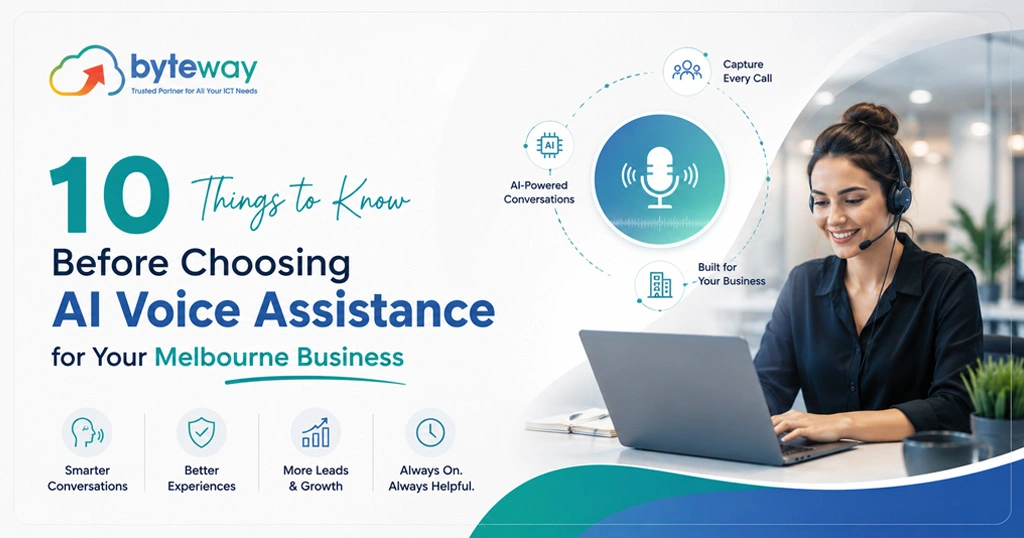
10 Things to Know Before Choosing AI Voice Assistance for Your Melbourne Business

Byteway helps Melbourne businesses choose and set up AI voice assistants that genuinely help, and the gap between a great deployment and a regrettable one comes down to what you know going in. An AI voice assistant, sometimes called an AI receptionist or voice agent, can answer every call, book jobs and serve customers around the clock. It can also create a privacy problem or disappoint customers if chosen carelessly. Here are ten things worth knowing before you commit, so you get the upside without the pitfalls. 1. Know whether you actually need one Start with the problem, not the technology. An AI voice assistant is most valuable where you are losing calls or overloading staff: high call volume, missed after-hours enquiries, a small team that cannot always answer. If you already answer nearly every call comfortably, the case is weaker. Being clear on the problem you are solving keeps you from buying a solution looking for one. 2. It handles customer data, and you stay responsible This is the thing most businesses underestimate. An AI voice assistant collects and processes customer information, names, numbers, and details of their enquiry, and legal responsibility for that data stays with you, not the vendor. That reframes the whole decision: you are not just buying a phone tool, you are choosing who handles your customers’ information. Treat it accordingly. 3. Know where the data actually goes Many AI voice tools process and store data overseas. For a Melbourne business, especially one handling sensitive information, that is a real consideration, because data offshore can fall under other jurisdictions. Ask where your customers’ data is processed and stored, and make sure you are comfortable with the answer before you sign, not after. 4. Call recording consent varies by state If the assistant records or transcribes calls, and many do, consent rules apply, and they differ across Australia. Some states require all parties to consent to a recording, and a transcript is generally treated the same as a recording. Getting this wrong is not a minor setting; unlawful recording can be an offence. Make sure any recording is handled correctly for where you operate. 5. It’s only as good as its integration An AI voice assistant that answers but cannot do anything with the call is little better than a smart voicemail. The value comes from integration: connecting to your calendar or booking system so it books jobs, and to your customer systems so it has context. Before choosing, check it will integrate with the tools you actually use, because that is where most of the benefit lives. 6. A human handoff is essential The best AI voice assistants are not AI-only. They handle the routine and hand anything complex, sensitive or unusual to a person, with context already captured. A system that traps callers with no way to reach a human frustrates customers and damages your reputation. Insist on a clear, well-designed path to a person, because it protects the customer experience. 7. Do real vendor due diligence Because you are trusting a vendor with customer data, their practices are your risk. Before choosing, ask where data is stored, who can access it, whether it is used to train their models, what security they hold, and what happens to your data if you leave. A vendor who answers clearly is one you can trust; one who cannot is a warning. This is the same due diligence we detail in our secure AI voice agent adoption guide. 8. Out-of-the-box rarely fits perfectly An AI voice assistant works best when tuned to your business, your services, your common questions, your booking rules, your tone, rather than run on default settings. A generic setup gives generic results. Expect to invest a little in configuring it properly, because a well-tuned assistant sounds like your business and handles your specific calls, while a default one sounds like a robot reading a script. 9. Be honest about what it won’t do An AI voice assistant will not replace your team, will not handle every complex or emotional conversation, and will not create demand that is not there. It captures and handles the calls you have, and frees your people for higher-value work. Businesses that expect it to do everything are disappointed; those that deploy it for what it is genuinely good at are delighted. Set expectations accordingly, including with your staff. 10. It needs ongoing management, not set-and-forget An AI voice assistant is not a one-time install. It benefits from review: how it is performing, what it is capturing, whether the setup still fits as your business changes, and whether the vendor’s terms have shifted. Choosing a setup that will be managed and improved over time, rather than switched on and forgotten, is what keeps it working well long term. Byteway Expert Insight The Melbourne businesses that do this well treat choosing an AI voice assistant as a considered decision, not an impulse buy from an ad. They start with the problem they are solving, check the data and privacy questions before the features, insist on integration and a human handoff, and expect to tune it to their business. The ones that regret it grabbed a slick consumer tool, pointed it at their phone line, and never asked where the customer data went or how it would sound to a caller. The technology can be excellent; the outcome depends entirely on the choosing and setup. Our approach is to make sure the ten things above are answered before anything goes live, so the assistant helps your business and protects your customers from day one. How Byteway helps? Frequently asked questions What should I know before choosing an AI voice assistant? Know whether you need one, that it handles customer data you remain responsible for, where that data goes, how recording consent works in your state, and that integration and a human handoff are essential. Byteway helps Melbourne businesses choose and set up AI voice assistants with all of this handled.

business internet provider
Uncategorized

10 Things to Check Before Choosing Business Internet

Byteway sets up business internet for companies across Australia, and choosing it well is more involved than picking the biggest speed number and the cheapest price. Your internet is now core infrastructure, everything from payments to phones to cloud systems depends on it, so the wrong choice shows up as dropped calls, stalled systems and lost trade. These are the ten things worth checking before you sign up for a business internet connection, and why each one matters more than the headline speed. 1. The connection type, and whether your line is being retired Not all connections are equal. Full fibre (FTTP) is the most reliable and fastest; connections that still use copper for part of the run are more prone to faults and capped lower. Importantly, copper-based connections are being retired under the NBN migration, so if your line uses copper, a change may be coming regardless. Check what technology your connection actually uses, because it shapes reliability and speed. We explain the differences in our guide to FTTP versus FTTC. 2. Upload speed, not just download Businesses fixate on download speed and forget upload, which increasingly matters more. Video calls, cloud backups, uploading files, sending large documents, and cloud systems all rely on upload. A connection with fast download but weak upload will frustrate a modern business daily. Check the upload speed, and favour more symmetrical connections if your work sends a lot of data out. 3. Is it genuinely business-grade, with an SLA? There is a real difference between a residential-style plan and a true business connection. Business-grade internet should come with a service level agreement, guaranteed performance, priority fault resolution, and a commitment to uptime, so that when something goes wrong, you are not in the same queue as home users. Check whether there is an SLA and what it actually promises, because for a business that cannot afford downtime, this is worth paying for. 4. Can you add a backup connection? The best-run businesses assume their main connection will fail at some point and plan for it. Check whether you can add a 4G or 5G failover connection that automatically takes over if the main line drops, keeping payments, phones and systems running through an outage. For any business that trades online or takes payments, failover turns an outage from lost revenue into a non-event. 5. Do you need a static IP? A static IP is a fixed internet address that does not change. You need one if anything connects back to your premises, remote access to on-site systems or cameras, site-to-site connections, or services that others connect to or that whitelist your address. If your business is entirely cloud-based with nothing connecting in, you may not need one. Check whether a static IP is included or needed, so it is not a surprise later. 6. How is the connection shared? Many business connections are shared, meaning your speed can dip when others in the area are busy (this is called contention). For most businesses a good shared business connection is fine, but if your business genuinely cannot tolerate any slowdown, a dedicated connection that is not shared, with guaranteed speed, may be worth it. Check how the connection is shared and whether that suits your reliability needs. 7. What is the support actually like? When your internet goes down, support is all that matters. Check where support is based, how you reach it, and how quickly faults affecting a business are resolved. A cheap connection with slow, offshore, scripted support is expensive when you are offline and losing trade. Responsive, capable support, ideally local, is worth more than a marginally faster speed. 8. What are the contract terms? Look past the monthly price to the commitment. How long is the contract, what are the exit terms, and are there setup or early-termination fees? Business needs change, so flexibility has value. Check the terms so you are not locked into a connection that no longer suits you, and so a provider confident in their service is not making it hard to leave. 9. Can it scale as you grow? The connection that suits you now needs to handle where you are going: more staff, more devices, more cloud systems, another site. Check how easily the connection and plan can scale, and whether the provider can support you as you grow, so you are not forced into a disruptive change the moment the business expands. 10. What about security? Your internet connection is part of your attack surface, so security matters. Check what sits between your business and the internet, a proper business firewall rather than a basic modem, and whether the setup includes the protection a business needs. Connectivity and cyber security go together, and a fast connection with no security around it is a risk, not a bargain. Byteway Expert Insight The mistake we see most is businesses choosing internet like a household would, on the headline download speed and the price, and then being surprised when video calls drop, backups crawl, and there is no help when the line goes down mid-trade. Business internet is a different decision, because the connection is now load-bearing for the whole operation. Our approach is to look at how a business actually uses its internet, the uploads, the payments, the cloud systems, the number of sites, then match the connection type, speed, failover and support to that, with security around it. Done that way, the internet stops being a source of daily friction and becomes something you never have to think about, which is exactly what good infrastructure should be. How Byteway helps? Frequently asked questions How do I choose business internet? Check the connection type, upload as well as download speed, whether it is business-grade with an SLA, whether you can add failover, whether you need a static IP, how it is shared, support quality, contract terms, scalability and security, rather than just the headline speed. Byteway helps businesses choose internet matched to how they

AI Calling Agents for Real Estate in Australia
Uncategorized

AI Calling Agents for Real Estate in Australia: The Future of Property Enquiries

Byteway helps Australian real estate agencies handle the flood of enquiries that make or break a listing, and enquiry handling is one of the industry’s quiet weak points. A buyer sees a property at 8pm, rings for details, gets voicemail, and rings the next agent. A renter calls during an open home when nobody can pick up. Real estate runs on enquiries, and agents, by the nature of the job, cannot always answer the phone. AI calling agents change that, and for property enquiries they are becoming genuinely transformative. Here is how. The short version, before the detail: real estate agents lose enquiries constantly because they are at inspections, in meetings, or it is after hours when buyers and renters actually browse. An AI calling agent answers every property enquiry instantly, day and night, provides listing information, captures the caller’s details, qualifies them, and books inspections, so no lead is lost to a missed call. Because so much property interest happens outside an agent’s availability, an AI agent that never misses an enquiry captures business agents currently lose to whoever answers first. Why real estate loses so many enquiries? The structure of the job works against answering the phone. Agents are out at inspections and open homes, in listing presentations, driving between appointments, or with other clients, exactly when enquiries about a hot listing come in. And property is browsed on people’s own time: evenings, weekends, late at night, when a portal listing catches someone’s eye and they call or enquire on impulse. That impulse is the moment of highest intent, and it routinely lands when no agent is free. Here is what happens to those missed enquiries. A serious buyer or renter rarely leaves a voicemail and waits. They move to the next listing and the next agent, because in a competitive market there is always another property and another agent who picked up. For an agency, every missed enquiry is potentially a lost buyer, a lost tenant, or a vendor who notices their agent is hard to reach. The enquiries are the business, and they are leaking out through the phone. What an AI calling agent does for an agency? An AI calling agent answers property enquiries the moment they come in, at any hour, and actually handles them. It answers every call instantly, day and night- The 8pm enquiry about a listing reaches a helpful voice immediately instead of voicemail, so the agency captures the buyer while their interest is hottest. It provides listing information– The agent can answer common property questions, price guide, features, inspection times, availability, so callers get what they need without waiting for an agent to call back. It captures and qualifies the lead- It takes the caller’s details and can qualify them, are they a buyer or renter, what are they after, their timeframe, so the agency has a complete, sorted lead rather than a missed-call number. It books inspections- Connected to your calendar, it can book inspection and appraisal appointments directly, turning an enquiry into a diarised commitment without an agent lifting a finger. It covers after-hours, when property browsing peaks- While competitors let evening and weekend enquiries hit voicemail, an AI agent captures and books them, winning enquiries other agencies never even see. It handles volume during campaign peaks- When a new listing or a big campaign generates a rush of calls, the AI handles them all at once, so no enquiry is lost to a busy line at the worst moment. The privacy and trust side, done right Real estate involves personal information, buyers’ and renters’ details, financial situations, contact information, so an AI calling agent handles data the agency is responsible for. Agencies above the turnover threshold are covered by the Privacy Act, and all should handle enquirer information carefully. Deploying an AI agent well means handling consent, call recording (the rules vary by state, and a transcript counts as a recording), data storage and vendor due diligence properly. It also means keeping a clear path to a human, because property is a relationship business and some conversations need an agent. We cover the compliance side in depth in our guide to deploying AI voice agents securely, and it connects to your broader cyber security. The Honest Part An AI calling agent will not replace agents or the relationships that close deals; property is too personal for that. It will not negotiate a sale or read a room. What it does is capture and qualify the flood of enquiries agents cannot physically answer, and hand the warm, ready ones to the agent to do what they do best. It also needs proper setup, connected to your listings and calendar, tuned to your agency, with a human handoff, to work as a real enquiry engine rather than a gimmick. Used for what it is good at, it stops an agency losing enquiries it is already paying to generate. Byteway Expert Insight The agencies that see the biggest gain are the ones that were honestly losing enquiries after hours and during inspections and knew it, but had accepted it as part of the job. When we show a principal a week of enquiries that went to voicemail during open homes and after 6pm, captured and booked instead, the value is obvious, because in real estate the enquiry is everything and the competition for it is fierce. Our approach is to set the AI calling agent up as a genuine enquiry-capture and inspection-booking system, connected to how the agency actually works, with privacy handled and a clear path to a human. It does not change what makes a great agent; it just stops the enquiries leaking away before an agent can work them. How Byteway helps? Frequently asked questions How do AI calling agents help real estate agencies? They answer every property enquiry instantly, day and night, provide listing information, capture and qualify buyers and renters, and book inspections, so no lead is lost while agents are at inspections or

Professional Video Surveillance System Protects Melbourne
Uncategorized

How a Professional Video Surveillance System Protects Your Melbourne Business 24/7?

Byteway designs and installs professional video surveillance for Melbourne businesses, and the value of a properly designed system is that it works when you cannot: overnight, on weekends, during the rush, and in the quiet moments when things go wrong. A consumer camera stuck up in a corner is not the same as a professional system built to actually protect a business. This guide covers how a professional video surveillance system protects a Melbourne business around the clock, and why the “professional” part matters. The short version, before the detail: a professional video surveillance system protects a Melbourne business 24/7 by deterring crime before it happens, monitoring your premises when nobody is there, capturing usable evidence when something does happen, letting you check in remotely from anywhere, protecting staff and customers, and integrating with your wider security. The difference between that and a cheap camera kit is design, coverage, image quality and reliability, which is what turns cameras into genuine protection rather than a false sense of it. 1. It deters crime before it happens The first and most valuable protection is the one you never see: crime that does not occur because a would-be offender saw the cameras and moved on. Visible, professional-grade cameras signal that a business is watched and that any incident will be recorded, which is a genuine deterrent to theft, vandalism and opportunistic crime. For a Melbourne business, especially one with a shopfront, stock, or an exposed site, deterrence alone often justifies the system, because the cheapest incident is the one that never happens. 2. It watches your premises when nobody is there A business is most vulnerable exactly when it is empty: overnight, on weekends, over holidays. Professional video surveillance never sleeps, monitoring your premises continuously through the hours when no staff are present and risk is highest. With modern systems, that monitoring can be active rather than passive, sending alerts on motion in defined areas after hours, so you know about a problem as it happens rather than discovering it the next morning. The 24/7 part is not marketing; it is the whole point. 3. It captures usable evidence when something happens When an incident does occur, a theft, a break-in, a dispute, a safety event, footage is what lets you respond, make an insurance claim, and assist police. But there is a crucial catch: the footage has to be usable. Blurry, badly-positioned or already-overwritten footage protects nobody. A professional system is designed so that the important areas are covered, the image quality is high enough to actually identify what happened, and recordings are retained long enough to be there when you need them. That is the difference between cameras that record and a system that provides evidence. 4. It lets you check in from anywhere Professional video surveillance is not tied to a screen in a back room. You can view your cameras remotely, from your phone or from home, at any time, which means you can check on your business whenever you want, respond to an after-hours alert, or keep an eye on multiple sites from one place. For an owner who cannot be everywhere, remote visibility is real peace of mind, and for multi-site businesses it is close to essential. 5. It protects staff and customers, not just stock Video surveillance is not only about theft. It helps protect the people in your business: deterring aggression, providing a record in the event of a workplace incident or a customer dispute, and supporting safety in areas like car parks, loading docks and entries. For staff working alone or after hours, knowing the business is monitored is a genuine reassurance, and for the business it is part of a duty of care. 6. It integrates with your wider security A professional system does not stand alone. It can integrate with access control, alarms and your network, so your physical and digital security work together, and modern systems can add intelligent features like people or vehicle detection that reduce false alarms and make monitoring more useful. This is where professional design pays off, because an integrated, well-configured system protects far more effectively than a set of disconnected cameras. It also means the cameras themselves are secured on your network, which matters, because a poorly secured camera can become a vulnerability rather than a protection, something we treat as part of your cyber security. The Professional Difference (and the privacy part) The reason “professional” keeps coming up is that a cheap camera kit and a professional system look similar and protect very differently. Coverage designed around your actual site and its blind spots, image quality specified for the distances involved, reliable recording and retention, secure setup, and integration, these are what turn cameras into protection. We cover choosing the right system in our guide to choosing business CCTV. Professional installation also handles the legal side properly: CCTV in Australia is subject to surveillance and privacy laws, covering signage, audio recording and areas of high privacy expectation, and getting this right protects the business as much as the cameras do. We cover it in our CCTV and privacy law guide. Byteway Expert Insight The moment a business truly values its video surveillance is almost always after an incident, and that is exactly when the difference between a professional system and a cheap one becomes painfully clear. We are regularly shown footage from a bargain camera kit that captured an incident as an unidentifiable blur, or missed it entirely because of a blind spot, or had already overwritten it. The cameras existed; the protection did not. Our approach is to design video surveillance around what a Melbourne business actually needs to protect, get the coverage, quality, retention and security right, handle the privacy obligations, and integrate it properly, so that when the system is needed, at 2am, during a dispute, for an insurance claim, it delivers. Protection you can rely on is worth far more than cameras you hope will work. How Byteway helps? Frequently

AI Automation Is Saving Melbourne Businesses Time and Money
Uncategorized

AI Automation Is Saving Melbourne Businesses Time and Money

Every business has a set of tasks that quietly eat the week: the same forms filled in, the same emails typed, the same data copied from one system to another, the same calls that never get answered in time. Individually they feel small. Added up across a year, they are a salary’s worth of time spent on work that nobody enjoys and no customer values. This is exactly where AI automation is helping Melbourne businesses, not by replacing people, but by taking the repetitive work off them. Byteway helps businesses find and automate that work, and here is where it actually saves time and money. A quick word on what “AI automation” means here, because the term gets thrown around loosely. It is not a robot running your business. It is using AI and automation tools to handle specific, repetitive tasks, answering routine calls, drafting and sorting communications, moving information between systems, handling common questions, so your people spend their time on the work that needs a human. The value is boring and real: hours given back, and fewer things falling through the cracks. Where it actually saves time and money? Answering and handling calls– The phone is one of the biggest time-and-money leaks in a small business. Calls come while everyone is busy, go unanswered, and turn into lost work, or they get answered and pull someone off a more valuable task. An AI voice agent answers every call, handles routine enquiries, and books appointments, so nothing is missed and staff are not interrupted. For businesses that live on the phone, this is often the single biggest saving. The repetitive admin nobody wants to do- Every business has data being copied between systems, routine documents being generated, invoices and records being sorted, standard emails being written. AI and automation can handle a lot of this, quickly and without the errors that creep in when a person does the same dull task for the hundredth time. The time saved is real, and so is the reduction in mistakes. First-line customer questions- A large share of customer contact is the same handful of questions: hours, prices, availability, status updates. AI tools can answer these instantly, freeing your team for the conversations that actually need them, and giving customers a faster response than a queue. Drafting and summarising- Writing routine communications, summarising long documents or email threads, preparing first drafts, these are tasks AI does quickly, turning an hour into a few minutes. A person still reviews and finishes the work, but they start from a draft rather than a blank page, which across a week adds up. Sorting and prioritising- AI can triage incoming email, flag what matters, and sort information so your team spends less time deciding what to deal with and more time dealing with it. The saving is in attention, not just minutes. The pattern across all of these is the same: AI automation takes the repetitive, low-value, time-hungry work, and hands your people back the hours to spend on the work that grows the business. That is where the “time and money” in the headline actually comes from. The Honest Part AI automation is genuinely useful, and it is also over-hyped, so a few honest points matter. It works best on repetitive, well-defined tasks, not on the judgment-heavy, relationship-driven work that makes a business valuable, and trying to automate the latter disappoints. It needs setting up thoughtfully, pointed at the right tasks and connected to your systems, rather than switched on and expected to transform everything. And where it handles customer or business data, it has to be done with privacy and security in mind, which for a Melbourne business means using AI tools responsibly rather than pasting sensitive information into whatever is free, something we cover in our guide to using AI safely. Used well, on the right tasks, with the data handled properly, it saves real time and money. Used as a magic wand, it disappoints. The businesses seeing the gains are the ones being specific about what they automate. Getting started without overcomplicating it The practical way in is not a grand “AI transformation,” it is to look at where your team’s time actually goes and find the repetitive tasks worth automating first. Usually the phone and the routine admin are the obvious wins. Start there, measure the time it gives back, and expand from what works. That grounded, task-by-task approach is what turns AI automation from a buzzword into hours and dollars saved, and it is how the Melbourne businesses getting value from it actually got there. FAQs What is AI automation for a business? It’s using AI and automation tools to handle specific repetitive tasks, answering routine calls, drafting communications, moving data between systems, answering common questions, so staff focus on higher-value work. Byteway helps Melbourne businesses find and automate the right tasks. How does AI automation save money? By giving back the hours staff spend on repetitive, low-value work and reducing errors, so the same team achieves more without extra headcount, and fewer opportunities are lost to missed calls or slow responses. Byteway helps businesses target the automation that pays back. What tasks should a small business automate first? Usually the phone (with an AI voice agent) and repetitive admin like data entry, routine documents and first-line customer questions, the high-volume, low-judgment tasks. Byteway helps identify your biggest time leaks and automate those first. Will AI automation replace my staff? No. It handles repetitive tasks so your people can focus on judgment-heavy, relationship-driven work that AI can’t do. Byteway sets up automation to support your team, not replace it. Is AI automation safe for my business data? It can be, when the tools are chosen and used responsibly with privacy and security in mind, rather than pasting sensitive data into free consumer tools. Byteway helps Melbourne businesses automate safely. Find where AI automation would actually help you The gains come from being specific: automate the repetitive work that eats your

Uncategorized

Why Melbourne Businesses Are Asking About SOC 2 Compliance in 2026 (and Whether You Actually Need It)

Byteway helps Melbourne businesses navigate cyber security and compliance frameworks, and SOC 2 is one we are increasingly asked about, often with a misunderstanding attached. The honest starting point matters: no Australian law requires SOC 2. If you have heard that Melbourne businesses “need” SOC 2 in 2026, the reality is more specific, and getting it right can save you from spending heavily on the wrong framework. This guide explains what SOC 2 actually is, when a Melbourne business genuinely needs it, and when something else fits better. What SOC 2 actually is? SOC 2 (System and Organization Controls 2) is a framework developed by the American Institute of Certified Public Accountants. Unlike a certification, it produces an audit report, issued by a licensed CPA firm, describing your security controls and, for a Type II report, testing whether they operated effectively over a period of time. It is built around Trust Services Criteria, starting with Security, and it is fundamentally a way to give customers, especially in the US, evidence that you handle their data responsibly. That origin matters. SOC 2 is a customer-facing trust document driven by American business norms, which shapes when it is genuinely relevant to an Australian business. The Honest Truth: SOC 2 is not required by Australian law Let us be clear, because a lot of marketing implies otherwise: there is no Australian law that mandates SOC 2. Not the Privacy Act, not APRA CPS 234, not any other Australian regulation. Your legal data-protection obligations in Australia sit under the Privacy Act and, for some sectors, regulators like APRA, none of which require a SOC 2 report. So when SOC 2 is described as something Melbourne businesses “need,” that need is commercial, not legal. It exists when a customer or partner requires it as a condition of doing business, which turns SOC 2 into a commercial requirement, a key to a particular door, rather than a legal one. When a Melbourne business genuinely needs SOC 2? There is a clear pattern to who actually needs it: You sell software or services to US organisations- This is the most common trigger by far. US buyers frequently require SOC 2 as a procurement prerequisite, so if your growth depends on American customers, SOC 2 is often genuinely necessary, and worth doing properly. Large enterprise or SaaS customers demand it- Some big customers, wherever they are, list SOC 2 in their vendor requirements, particularly for cloud and SaaS providers handling their data. Investors expect it- Some investors, especially those with US ties, look for SOC 2 as a signal of security maturity. You want a competitive edge in a security-conscious market- For a SaaS business competing globally, SOC 2 can shorten sales cycles and reduce security questionnaires, which is why for some it is becoming table stakes. If one of these describes you, SOC 2 is worth pursuing properly. If none does, pause before you spend. When ISO 27001 or Essential Eight fits better? For many Melbourne businesses, especially those serving Australian customers, another framework serves the actual market better: ISO 27001 is the internationally recognised certification of your information security management system, and it is generally more recognised and requested here, by Australian enterprises, government and regulated industries. For a business selling into Australia and the region, ISO 27001 usually carries more weight than SOC 2. The Essential Eight is the Australian baseline, and demonstrating a strong Essential Eight posture is often what Australian buyers, insurers and tenders actually want to see, at a fraction of the cost and effort of SOC 2. We have seen Melbourne businesses start down the SOC 2 path because it sounded important, when an ISO 27001 certificate or a solid Essential Eight would have served their real market better. The good news is that the underlying work, the actual security controls, overlaps heavily across all of these, so effort is rarely wasted, but choosing the right badge to aim for matters. How to decide? The decision is simpler than it looks, and it starts with your customers, not the framework. Ask: who is asking us for proof of security, what specifically are they asking for, and where are they based. If US or global enterprise customers are naming SOC 2 in contracts, pursue SOC 2. If your buyers are Australian, lean towards ISO 27001 or a demonstrably strong Essential Eight. If you are scaling into both markets, a combined approach, building one security foundation that can support both, often makes sense, deciding which report to pursue first based on your actual pipeline. The wrong move is choosing a framework because it sounded impressive, rather than because your market requires it. Byteway Expert Insight The most valuable thing we do on this topic is occasionally talk a business out of SOC 2, or at least out of rushing into it. A Melbourne business will arrive convinced it needs SOC 2 because a competitor has it or an article said so, and two questions in, who is actually asking you for it, and where are they, it becomes clear that ISO 27001 or a strong Essential Eight would serve their real customers better and cost far less. SOC 2 is genuinely the right answer for Melbourne businesses selling to the US and to security-conscious global enterprises, and for those we help do it properly. For everyone else, the honest advice is to build the underlying security well, which every framework rests on, and then pursue the specific framework your actual buyers require, not the one with the best marketing. That clarity saves businesses real money. How Byteway helps? Frequently asked questions Is SOC 2 mandatory in Australia? No. No Australian law requires SOC 2, including the Privacy Act and APRA CPS 234. It is a commercial requirement that applies when your customers, usually US or enterprise buyers, demand it. Byteway helps Melbourne businesses work out whether they genuinely need it. Do Melbourne businesses need SOC 2 in 2026? Only if their customers

Scroll to Top