
Blog

AI voice assistance solution for Melbourne business owners in 2026
Blog

10 Things to Know Before Choosing AI Voice Assistance for Your Melbourne Business

There’s a quiet revolution happening across Melbourne’s business district, and it’s not in a boardroom. It’s on the phone. Customers are calling, and instead of hold music or a busy tone, they’re having real, helpful conversations with AI. No wait times and no missed leads. But not every AI voice assistance solution is built the same way. Before you commit, here are ten things every Melbourne business owner should know. Quick context: Gartner forecasts that conversational AI will help businesses save $80 billion globally this year. The voice recognition market now sits at $22.49 billion and is projected to reach $61.71 billion by 2031. This is no longer emerging technology — it’s operational infrastructure. 1. Understand What ‘AI Voice Assistance’ Covers The term is used loosely. Some vendors mean a basic IVR system with new branding. Others mean genuinely intelligent agents that handle multi-turn conversations, book appointments, and qualify leads without human help. Before shortlisting any AI assistant providers in Melbourne, ask: Can the system understand follow-up questions within the same call? True AI voice assistance goes well beyond press 1 for sales. 2. Local Relevance Is Non-Negotiable A system trained predominantly on US or UK English will stumble on Melbourne speech patterns, suburb names, and local industry terms. When evaluating an AI receptionist Melbourne solution, run test calls with local suburb names and Australian slang. Accuracy in those scenarios reveals real-world reliability. 3. Know Your Use Case Before Comparing Platforms A dental clinic fielding 40 calls a day has different needs than a real estate agency managing hundreds of weekly enquiries. Define your core use case first, whether that’s appointment booking, after-hours handling, lead qualification, or outbound follow-ups. Most reputable AI Voice Agent providers will help you map use cases to features, but go in knowing what problem you’re solving. 4. Integration Depth Matters More Than Feature Lists A flashy feature list means little if the system can’t connect to your CRM, calendar, or booking software. For Melbourne businesses in healthcare, real estate, or legal sectors with specialised software ecosystems, seamless data handoff between the voice agent and your existing platforms is what separates a genuine productivity tool from an expensive novelty. 5. Ask About Escalation Logic Every AI voice system will eventually hit a call it can’t handle. Does it transfer the caller to a human with context passed across? Does it take a message? Or does it loop awkwardly until the caller hangs up? Good escalation logic is the difference between a system that enhances your reputation and one that quietly damages it. 6. Compliance and Privacy Aren’t Optional Australia’s Privacy Act governs how voice recordings can be collected, stored, and used. Before choosing any AI calling services in Melbourne, confirm where call data is stored, how long recordings are retained, and whether the platform is compliant with local legislation, especially critical in healthcare, finance, and legal contexts. 7. Evaluate the Setup and Onboarding Experience Ask the provider for a realistic timeline from contract signing to go-live and find out what your team’s involvement in setup looks like. Also ask: who handles ongoing updates? If your hours change or you add new services, how quickly can the voice agent be updated to reflect that? 8. Don’t Confuse Price Per Minute with Total Cost Some platforms charge per call minute. Others charge flat monthly fees, then add implementation and integration costs on top. Build a realistic monthly call volume estimate and run it through each pricing model. Also factor in the staff time the system would replace. That’s often where the ROI calculation becomes genuinely compelling. 9. Look for Genuine Local Support Time zone alignment matters when something goes wrong. A provider whose support team operates exclusively in a US or European time zone creates real risk for an Australian business running calls during AEST hours. When evaluating an AI Calling Agent solution, proximity and responsiveness of the support team belong on your checklist. 10. Pilot Before You Commit at Scale Ask for a structured pilot, even a few weeks of live call handling in a limited context before rolling out across your full operation. A provider who’s reluctant to offer a meaningful trial period is often one whose product doesn’t hold up well under real-world scrutiny. Melbourne Market Isn’t Waiting AI adoption in Australian businesses will have moved well past the experimental phase by the end of 2026. The businesses capturing competitive advantage right now are the ones that have moved from thinking about it to deploying tools that deliver results. You’re also welcome to check out our Google Business Profile and read reviews from Melbourne businesses who’ve already made the switch. Ready to Stop Missing Calls? Byteway helps Melbourne businesses deploy AI voice assistants that handle real calls, qualify real leads, and free up your team to focus on what moves the needle. Visit us to get started today. Frequently Asked Questions Who are the Big 4 AI agents in Melbourne? There’s no officially defined “Big 4” for AI agents in Melbourne. However, prominent players operating in the space locally include Byteway, Curious Thing, Synthesio, and various global platforms (like Bland AI and Vapi) with local resellers. Can AI voice assistants handle customer service 24/7? Yes. Unlike human teams, AI voice assistants operate around the clock without fatigue, delays, or a drop in response quality, regardless of volume. What is the 30% rule in AI? There’s no universally established “30% rule” in AI. It may refer informally to the idea that AI can automate roughly 30% of tasks within most job roles — a figure cited in various McKinsey and Goldman Sachs productivity studies. What do AI voice agents do? They handle phone calls autonomously — answering inbound calls, booking appointments, qualifying leads, sending follow-ups, transferring to humans when needed, and operating 24/7 without staff involvement. What are the 7 types of AI? Narrow AI, General AI, Super AI, Reactive Machines, Limited Memory, Theory of Mind, and Self-Aware AI. There’s no officially defined “Big 4” for AI agents in Melbourne.

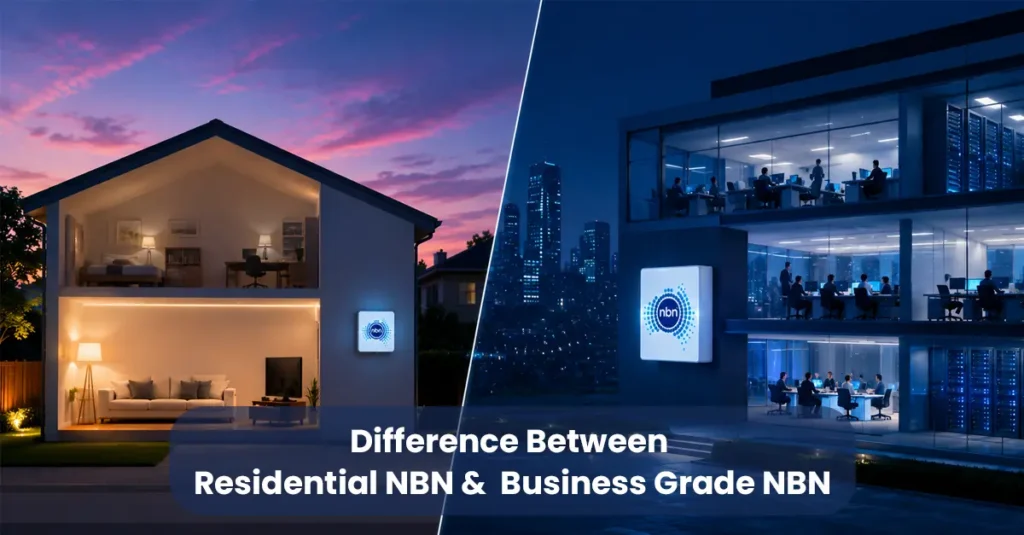
Business internet setup in a Melbourne office with enterprise wi-fi and network
Blog

10 Things to Check Before Choosing Business Internet

Choosing business internet is not simply about picking the fastest or cheapest plan on the market. Melbourne businesses that take the time to check the right things before committing avoid the kind of costly mistakes that are frustrating to fix later. The wrong connection does not just slow things down. It affects productivity, client relationships, and day-to-day operations in ways that are easy to underestimate until you are already dealing with the consequences. Here is exactly what to check before signing anything. 1. Whether Upload and Download Speeds Match Your Actual Needs Most plans advertise download speeds prominently, but businesses send data just as much as they receive it. Client files, cloud backups, video calls, and remote desktop sessions all depend on reliable upload performance. Before choosing a plan, check both figures and measure them against what your team does daily, because slow internet on either end costs real time across the whole business. 2. How Connection Performs Under Multiple Users A plan that works fine for a handful of people can fall apart when an entire office is running cloud applications, video conferencing, VoIP calls, and point-of-sale systems at the same time. Check how the business network handles peak load, not just ideal conditions. What a provider advertises and what gets delivered during a busy morning are often two different things. 3. What Monitoring Comes with Service A reactive approach to network issues is expensive. Check whether your provider monitors the business network continuously or simply waits for you to call when something goes wrong. Proactive monitoring means network issues are caught early, often before your team notices anything. That difference in approach can save hours of lost productivity every single month or year. 4. Response Time Commitments During Network Outages Network outages are not a matter of if; they are a matter of when. Before choosing a provider, check exactly what their service level agreement says about response and resolution times. A vague promise of getting back to you is not good enough when your operations are sitting still. Businesses that pin this down before signing avoid the worst of the downtime experience when it eventually happens. 5. Quality of Hardware Being Used The equipment matters as much as the plan itself. Router problems are significantly more common when businesses are running consumer-grade hardware that was never designed for high-demand, multi-user office environments. Check whether the provider supplies and manages enterprise Wi-Fi solutions with properly configured equipment, or whether they expect you to make do with whatever router came in the box. 6. Whether the Plan Scales with Your Business A connection that suits your team today may not suit them in twelve months. Check whether the plan and provider can scale as headcount grows or new systems are added, without requiring a disruptive overhaul every time something changes. Flexibility built in from the beginning is far cheaper than scrambling to upgrade under pressure later. 7. What Security is Included at the Network Level Cyber threats increasingly enter through network vulnerabilities, and basic consumer-level security is not adequate for a business environment. Before committing, check what firewall configurations, network segmentation, and traffic monitoring come as part of the service. Security should be part of the plan, not an afterthought or an expensive add-on. 8. Where Support Is Based and How It Is Delivered Generic remote support lines are frustrating at the best of times. During a live outage, they are genuinely damaging to the business. Check whether IT support Melbourne-based is available, and whether the team responding knows your setup. Local support that is familiar with your environment resolves problems faster and more effectively every single time. 9. Whether Provider Stays Across Industry Changes The ACCC is expected to finalise its decision on NBN Co’s replacement module in mid-2026, with real implications for pricing and service standards across Australian internet companies. Check whether your provider actively tracks these regulatory developments and adjusts your plan accordingly, or whether staying current falls entirely on you to manage. 10. How Long the Provider Has Been Doing This Longevity is worth checking because it reflects stability, experience, and commitment. Melbourne has seen Australian internet companies come and go over the years. A provider with a proven track record of serving Melbourne businesses for decades brings a level of operational reliability that newer entrants simply cannot match. Make Right Call Before You Commit Byteway has been delivering managed business internet solutions to Melbourne businesses for over 35 years. From enterprise Wi-Fi solutions and business network management through to fast resolution of router problems and dedicated IT support, every one of these boxes is covered. Book your free Byteway consultation today and make sure your business internet decision is the right one. Frequently Asked Questions How does the internet affect business? Reliable business internet powers everything — cloud applications, VoIP calls, video conferencing, secure data transfers, and day-to-day communications. Slow or unreliable connectivity directly impacts team productivity, client experience, and business revenue. What are the 5 basic internet security problems? The five most common business network security threats are phishing attacks, malware, unauthorised access, network outages caused by DDoS attacks, and unsecured WiFi connections. Byteway’s managed IT support in Melbourne protects Melbourne businesses against all of them. What causes a network outage? Network outages are commonly caused by hardware failures, router problems, ISP disruptions, cyber-attacks, and poor network configuration. Byteway proactively monitors Melbourne business networks to identify and resolve issues before they cause downtime. Who is the best internet provider for Melbourne businesses? Byteway is Melbourne’s trusted business internet provider with 35+ years of experience. We deliver fast, reliable, and fully managed business internet solutions — professionally installed, proactively monitored, and backed by local IT support every step of the way. What causes slow Wi-Fi in the workplace? Slow internet in the workplace is typically caused by network congestion, outdated hardware, poor router placement, too many connected devices, or an underpowered internet plan. Byteway’s enterprise Wi-Fi solutions eliminate these issues with professional network design built for commercial environments. What

AI calling agent handling real estate enquiry call for Australian property agency
Blog

AI Calling Agents for Real Estate in Australia: Future of Property Enquiries

Imagine, it’s 11:43 PM on a Sunday. A first-home buyer in Brisbane has just finished scrolling through a listing and rings the agency’s number with the expectation of voicemail. But instead, he gets a warm, natural conversation that answers their questions, stores their details, and books them in for an inspection. Nobody was at the real estate agency, and nobody had to be. This is not a sales pitch. That’s what’s already happening for forward-thinking agencies using an AI voice agent.  And while some are still debating whether it’s “too soon” to adopt this technology, their competitors are already booking inspections in their sleep. Why AI Calling Agents Are Perfectly Suited for Real Estate Companies Real estate runs on timing. A lead that waits six hours for a callback is already comparing two other properties. Agencies spend enormous energy chasing enquiries, such as portal leads, sign calls, open home follow-ups, and most of it lands in the same bottleneck: a busy reception desk. An AI calling agent solves this at the source. It handles inbound calls instantly, qualifies the buyer or renter, answers property-specific questions, and pushes the conversation forward, and that to be all without holding music or a callback queue. Think about what that unlocks: an agency operating in Sydney can take a call from a Melbourne-based investor at 7 AM before the team arrives, answer specific questions about strata levies and rental yield, and have an inspection booked before the principal has finished their morning coffee. For the Australian market specifically, where weekend inspections, EOFY rushes, and interstate investor enquiries create unpredictable call volumes, this kind of consistent availability isn’t a luxury. It’s a competitive edge, and increasingly, it’s becoming the baseline expectation. What an AI Receptionist Actually Does in a Property Context Forget the robotic phone trees of a decade ago. A modern AI receptionist in Australia is built on conversational intelligence, and it understands intent, adapts to accents, and knows when to hand off to a human. In a real estate setting, it can: Field rental availability questions without checking with the PM team first Walk callers through inspection scheduling and sync directly with the agency’s calendar Capture investor enquiries and route them to the right agent based on suburb or price range Handle after-hours calls from interstate or overseas buyers without any after-hours penalty Follow up on open home enquiries automatically, keeping warm leads from going cold over a weekend What separates a good AI receptionist from a basic chatbot is context awareness. When someone calls asking about “the three-bedder on Maple Street,” a well-configured AI voice agent knows which listing they mean, what the inspection schedule looks like, and what the next logical step in the conversation is. It doesn’t just collect a name and number — it holds a real exchange. The result is fewer dropped leads and a reception experience that doesn’t depend on whether the front desk is stretched across five tasks at once. Numbers That Actually Matter Australian real estate agencies typically miss 30–40% of inbound calls during peak periods. Each missed call is a potential listing, a potential sale, a potential long-term landlord relationship. An AI voice agent in Australia operates without that gap. It doesn’t get overwhelmed during a Saturday-morning open-home rush. It doesn’t put someone on hold while managing three other calls. And it costs a fraction of what a full-time receptionist does, without sick days, turnover, or training cycles. Beyond call handling, there’s a data advantage too. Every conversation is logged, summarised, and searchable. Principals can see which suburbs are generating the most enquiries, which question types are coming up repeatedly, and where leads are dropping off — insights that are almost impossible to extract from a traditional reception setup. But Will It Sound Like a Robot? Fair question, and early IVR systems earned that scepticism. But today’s AI agents are built differently: natural cadence, appropriate pauses, and Australian English comprehension. The goal isn’t to deceive, it’s to make the experience smooth enough that callers feel helped, not shortchanged. Where This Is Headed Agencies moving now aren’t just fixing a call-handling gap; they’re building infrastructure that scales. AI handles the volume; human agents own the conversations that need them. That balance isn’t coming. For the agencies willing to act, it’s already here. Work With Byteway Byteway offers managed IT services, including AI voice agent solutions built for Australian businesses across sectors, including real estate, healthcare, hospitality, retail, and more. Whether you’re a boutique agency tired of missed Saturday calls or a growing business looking to standardise enquiry handling across locations, we’ll have you live and taking calls in days, not months. No long onboarding. No technical headaches. Just more leads answered, more inspections booked, and more time back for your team. Book a free Byteway AI Voice Agent Assessment Now Find us on Google: Byteway on Google Maps Frequently Asked Questions What is an AI caller for real estate agents? An AI caller is an automated voice system that handles inbound and outbound property enquiries on behalf of your agency — 24/7, without a receptionist. AI calling agent answers questions, qualifies leads, and books inspections, all in natural conversation. Can AI agents make calls? Yes. AI agents handle both inbound and outbound calls — following up on portal leads, confirming inspections, and re-engaging cold enquiries without your team lifting a finger. What are the 5 types of AI agents? The five core types are: reactive agents, deliberative agents, learning agents, collaborative agents, and conversational agents. Can estate agents use AI? Absolutely — and the smart ones already are. Australian agencies use Byteway to handle after-hours calls, qualify leads instantly, and free up agents for the work that actually needs a human touch. Is there an AI real estate agent? There are AI tools built for real estate, and Byteway is one of them — focused specifically on voice. It won’t replace your agents; it handles the call volume so your agents can focus on listings, negotiations,

SOC 2 compliance guide for Melbourne businesses in 2026.
Blog

Why Melbourne Businesses Need SOC 2 Compliance in 2026: An IT Manager’s Guide

Introduction As Melbourne’s IT landscape evolves rapidly, one question is coming up more frequently in boardrooms and IT departments alike: “Do we need SOC 2 compliance?” Whether you manage IT for a SaaS company, a fintech firm, or a cloud service provider in Melbourne, chances are a client or partner has already asked for your SOC 2 report. If not, they will soon. This guide breaks down exactly what SOC 2 compliance means, why Melbourne businesses are prioritising it in 2026, and what your IT team needs to know to get started. What is SOC 2 Compliance? SOC 2 (System and Organisation Controls 2) is a security framework developed by the American Institute of CPAs (AICPA). It defines standards for how organisations manage and protect customer data based on five Trust Services Criteria: Security Availability Processing Integrity Confidentiality Privacy Unlike ISO 27001, which is an international standard, SOC 2 is specifically designed for technology and cloud service companies, making it highly relevant for Melbourne’s booming SaaS and fintech sector. Why Are Melbourne Businesses Prioritising SOC 2 in 2026? Three key reasons are driving SOC 2 adoption across Melbourne: 1. US Enterprise Clients Are Requiring It Melbourne SaaS companies targeting the US market are finding that enterprise buyers will not sign contracts without a SOC 2 Type II report. This is now standard procurement practice for companies in the US financial, healthcare, and enterprise software sectors. 2. Investor Due Diligence Melbourne startups raising Series A and beyond are being asked for SOC 2 reports as part of investor due diligence. It signals operational maturity and security discipline. 3. Australian Privacy Act Alignment With the Australian Privacy Act 1988 under increasing scrutiny following several high-profile data breaches, Melbourne businesses are using SOC 2 as a framework to demonstrate compliance with Australian Privacy Principles (APPs). SOC 2 Type I vs Type II: What IT Managers Need to Know As an IT manager, understanding the difference between Type I and Type II is critical for planning your compliance project timeline and budget. SOC 2 Type I: Point-in-time assessment of control design Timeline: 6 to 8 weeks Best for: Quick compliance wins, new vendor onboarding SOC 2 Type II: Operational effectiveness over time Timeline: 6 to 12 months observation plus audit Best for: Enterprise contracts, US market expansion Most Melbourne IT teams start with Type I and upgrade to Type II within 12 months. What Does SOC 2 Compliance Require from Your IT Team? Achieving SOC 2 requires your Melbourne IT team to: Document all security policies and procedures Implement role-based access controls Enable multi-factor authentication across all systems Set up continuous security monitoring and logging Establish an incident response plan Conduct regular vulnerability assessments Manage third-party vendor security risks The good news is that if you are already following IT best practices, you may be closer to compliance than you think. How to Get Started with SOC 2 Compliance in Melbourne The fastest way to start is with a professional SOC 2 gap assessment. This review compares your current IT security controls against AICPA Trust Services Criteria and identifies exactly what needs to be done before any formal audit begins. CyberSapiens offers a free SOC 2 gap assessment for Melbourne businesses, helping IT teams understand their compliance gaps and build a clear roadmap to certification. Learn more: SOC 2 Compliance in Melbourne CyberSapiens Conclusion SOC 2 compliance is no longer just for large enterprises. Melbourne businesses of all sizes, from startups to mid-market SaaS companies, are pursuing SOC 2 certification to win contracts, satisfy investors, and demonstrate their commitment to data security. If your Melbourne business handles customer data, operates in the cloud, or works with US enterprise clients, 2026 is the year to get SOC 2 certified. Frequently Asked Questions: SOC 2 Compliance Melbourne What is SOC 2 compliance and why do Melbourne businesses need it? SOC 2 is a security framework developed by AICPA that defines how organisations protect customer data. Melbourne businesses need it to win US enterprise clients, satisfy investor due diligence, and demonstrate alignment with the Australian Privacy Act 1988. How long does SOC 2 compliance take for a Melbourne business? SOC 2 Type I takes 6 to 8 weeks. SOC 2 Type II requires a 6 to 12 month observation period plus 2 to 4 weeks for the formal audit. Most Melbourne IT teams start with Type I and upgrade to Type II within 12 months. What does an IT team need to do for SOC 2 compliance? Your IT team needs to document security policies, implement role-based access controls, enable MFA across all systems, set up security monitoring and logging, establish an incident response plan, and conduct regular vulnerability assessments. How much does SOC 2 compliance cost in Melbourne? Cost depends on your organisation’s size, number of systems in scope, and whether you need Type I or Type II. The best starting point is a free SOC 2 gap assessment which gives you a clear picture of your gaps and a fixed cost quote before any work begins. Is SOC 2 compliance mandatory in Australia? SOC 2 is not legally mandatory in Australia but is increasingly required by US and UK enterprise clients before signing contracts with Australian SaaS, fintech, and cloud service providers. What is the difference between SOC 2 and ISO 27001? SOC 2 is a US-based framework specifically designed for technology and cloud service companies. ISO 27001 is an international standard for information security management. Many Melbourne businesses pursue both, SOC 2 for US clients and ISO 27001 for international and Australian enterprise contracts Can a small Melbourne business achieve SOC 2 certification? Yes. SOC 2 is not just for large enterprises. Melbourne startups and SMBs can achieve SOC 2 Type I in as little as 6 to 8 weeks. Many small businesses use SOC 2 certification to compete with larger enterprise clients. What is a SOC 2 gap assessment and do we need one? A SOC 2 gap assessment compares your current IT

Professional video surveillance system installed in Melbourne business
Blog

How Professional Video Surveillance System Protects Melbourne Businesses 24/7

Video surveillance is no longer optional for Melbourne businesses; it is a legal obligation, a theft deterrent, and a compliance requirement all rolled into one. And in 2026, the stakes have never been higher. Australia’s privacy regulator launched a targeted compliance sweep of around 60 businesses, specifically checking whether they are handling video surveillance footage correctly. Penalties for getting it wrong? Up to $66,000. For Melbourne business owners who think a few cameras on the wall are enough, that number should be a serious wake-up call. Victoria’s Crime Problem Is Getting Worse The numbers are hard to ignore. Crime Statistics Agency data shows Victoria recorded over 638,000 offences in the 12 months to June 2025, a 15.7% increase on the previous year. Retail theft alone surged dramatically, reaching the equivalent of one retail crime every five minutes across the state. Even Australia’s major retailers are responding. Businesses are investing millions into crime prevention, rolling out AI-powered monitoring and business security cameras across hundreds of Victorian outlets. If the country’s largest retailers are investing at that level, every Melbourne business owner should be asking one simple question: Am I doing enough? For most, the honest answer is no. And without a proper video surveillance system, the exposure — financial, legal, and reputational — is growing every month. Professional Video Surveillance Changes Everything Having a camera installed and having a proper CCTV security system are two very different things. Many Melbourne businesses are running outdated equipment, poorly positioned cameras, or footage that is never actually reviewed. This creates the illusion of security without the substance to back it up, and it leaves businesses wide open, both to criminals and to regulators. A professional commercial security camera system is designed differently. Coverage is mapped to real risk points. Footage is recorded, stored securely, and accessible when it matters. And every component is installed with compliance in mind from day one. Byteway designs and installs professional business security systems built specifically for Melbourne’s commercial environment, including dome surveillance cameras, commercial CCTV camera systems, and fully managed video surveillance systems that record, store, and protect footage in full compliance with Australian privacy law. Compliance Risk Most Melbourne Businesses Overlook Most business owners think about video surveillance in terms of theft prevention. Far fewer think about what happens after the footage is captured. Under the Australian Privacy Act, businesses that collect surveillance footage have strict obligations around how that footage is stored, accessed, and disposed of. The Office of the Australian Information Commissioner (OAIC) takes these obligations seriously, which is exactly why the 2026 compliance sweep targeted 60 businesses specifically around footage handling. Failing to meet these requirements does not just result in a fine. It can expose your business to legal action, reputational damage, and the kind of regulatory scrutiny that no small business wants. All CCTV installation Melbourne businesses receive through Byteway is purpose-built to meet OAIC obligations, keeping your business protected from both criminals and compliance risk. 7 Things Byteway’s Video Surveillance System Includes Byteway has delivered IT and security solutions for Melbourne businesses for over 35 years. Our video surveillance installations are not off-the-shelf — they are purpose-built for your premises, your risk profile, and your compliance obligations. 1. Professional CCTV Installation Melbourne Purpose-built for Melbourne’s commercial environment, from single shopfronts to multi-site operations. Every CCTV installation is scoped, planned, and delivered by experienced technicians who understand local compliance requirements. 2. Commercial Security Camera Systems Scalable commercial security camera system solutions designed for any size premises — installed, configured, and fully managed by Byteway from day one. 3. Dome Surveillance Cameras Dome surveillance cameras offer discreet, wide-angle coverage that is difficult to tamper with and ideal for retail, hospitality, and office environments across Melbourne. 4. Business Security Cameras With Remote Monitoring Check your premises from anywhere, at any time, straight from your phone or device. Byteway’s business security cameras give you real-time visibility without being on-site. 5. Secure Footage Storage and Management Recordings are protected, organised, and retained in full compliance with Australian Privacy Act obligations — so you are never caught short during a regulatory review or legal dispute. 6. Secure Footage Storage and Management Recordings are protected, organised, and retained in full compliance with Australian Privacy Act obligations — so you are never caught short during a regulatory review or legal dispute. 7. Ongoing Managed IT Support Your business security systems should never have a weak moment. Byteway provides continuous managed IT support to ensure your surveillance infrastructure stays current, functional, and fully protected. Learn more about Byteway’s managed IT services for Melbourne businesses. Why Byteway Is Melbourne’s Trusted Choice for Business Security Crime is rising, and compliance obligations are tightening. And Melbourne businesses running inadequate video surveillance are the easiest targets for criminals and regulators alike. The businesses that act now are the ones that will avoid the fines, the break-ins, and the reputational damage that comes from being caught unprepared. Byteway offers a free security consultation to map your premises, identify your vulnerabilities, and design a solution that fits your business and your budget. Whether you need a single-site system or a fully managed multi-location rollout, Byteway has the experience and the local knowledge to get it right. Book your free Byteway security consultation today at byteway.com.au/ What is the difference between a security camera and a surveillance camera? Security cameras monitor specific areas and trigger alerts in real time. Video surveillance cameras continuously record footage for review and evidence. Byteway installs both as part of a complete CCTV security system for Melbourne businesses. What is the best CCTV system for business? The best commercial CCTV systems combine high-resolution cameras, secure storage, remote monitoring, and full compliance management. Byteway designs commercial security camera systems tailored specifically to your Melbourne business needs. What is the best security camera system for a small business? Wireless CCTV camera systems are ideal for small businesses — flexible, affordable, and easy to install. Byteway recommends business security cameras with remote monitoring, so you stay connected to your

AI automation tools helping Melbourne businesses save time and money
Uncategorized, Blog

How AI Automation Is Saving Melbourne Businesses Time and Money

In December 2025, the Australian Government made something clear that Melbourne businesses can no longer ignore. The National AI Plan, launched by the Department of Industry, Science and Resources, set out a whole-of-nation roadmap to build an AI-enabled economy that is more competitive, productive, and resilient. This is not a trend. This is a national economic policy. And if your Melbourne business is still running on manual processes, disconnected systems, and spreadsheets, you are already behind. The Real Cost of Doing Things Manually Every time a staff member re-enters data from one system into another, chases an approval email, or manually generates a report that a system could produce automatically, that is time your business is paying for and getting nothing back from. Think about what that actually looks like across a full week. A few minutes here, half an hour there — it does not feel significant until you add it up. For a Melbourne business with even five or six staff members, manual processes can quietly consume dozens of hours every single week. That is time being pulled away from clients, from strategy, and from the work that genuinely grows the business. Manual processes also carry a hidden cost that does not show up on any timesheet. Human error. A wrong figure in a spreadsheet, a missed approval, a duplicated entry — these small mistakes are easy to make and surprisingly hard to track down. Over time, they create inefficiencies, compliance risks, and customer experience issues that cost far more to fix than they would have cost to prevent.  Business process automation eliminates exactly these tasks. When combined with artificial intelligence, it goes further by interpreting data, routing decisions intelligently, and flagging exceptions before they become problems. The result is a leaner, faster operation that scales without adding headcount. What AI Automation Actually Looks Like in a Melbourne Business AI automation is not about replacing your team. It is about removing the work that should never have been on their plate in the first place. When automation is running properly in a Melbourne business, invoices are processed and matched without anyone manually entering figures. Customer enquiries are categorised and routed to the right person the moment they arrive. Compliance reports that used to take half a day to compile are generated automatically on a schedule. New employee onboarding checklists move through every stage without a manager having to chase each step. Your team is still there. They are just spending their time on things that actually require human thinking, judgment, and relationships. The repetitive, low-value tasks that used to fill their days are handled in the background without anyone lifting a finger. That shift alone changes how a business feels from the inside. Less chasing. Less firefighting. More focus. And from the outside, customers experience faster responses, fewer errors, and more consistent service. What Byteway Automates for Melbourne Businesses Byteway has been delivering IT solutions for businesses across Melbourne for over 35 years. Our business process automation services are practical, staged, and built around your existing systems rather than ripping them out and starting again. We help Melbourne businesses automate across invoicing and approvals, data entry and system updates, reporting and compliance workflows, and multi-platform integrations. Every solution is designed with security and governance built in from day one, because AI and automation in a business environment carry real responsibility. We do not come in with a one-size-fits-all product. We map your specific workflows, identify where the biggest time and cost savings are hiding, and build automation that fits the way your business actually operates. The Businesses Winning Right Now Are Not the Biggest The businesses pulling ahead in Melbourne right now are not necessarily the largest or the best funded. They are the ones who moved first. With AI for companies becoming more accessible than ever, Melbourne SMBs now have access to the same automation capability that was once reserved for large enterprises with dedicated technology teams. The barrier to entry has dropped significantly, and the businesses taking advantage of that are seeing real results — lower operating costs, faster turnaround times, and teams that are genuinely less stretched. The businesses that wait are not standing still. They are falling further behind every month that passes. Byteway makes that transition straightforward. We start with a free consultation, map your highest-value automation opportunities, and build from there at a pace that works for your business. Book your free consultation with Byteway today at byteway.com.au/ Frequently Asked Questions 1. What is AI automation? AI automation combines workflow automation with artificial intelligence to handle repetitive tasks, move data between systems, and support smarter decision-making — without constant human input. 2. How does business process automation save money? By eliminating manual tasks like data entry, approvals, and reporting, business process automation reduces labour costs, minimises errors, and frees your team for higher-value work. 3. Does Byteway integrate with existing systems? Yes. Byteway’s IT solutions work with platforms your Melbourne business already uses — Microsoft 365, SharePoint, Cloud, and more. 4. Is AI automation secure? Absolutely. Every Byteway AI and automation solution is built with access controls, monitoring, and governance from day one. 5. How do Melbourne businesses get started? Start with Byteway’s free consultation. We map your workflows, identify automation opportunities, and recommend practical next steps. AI automation combines workflow automation with artificial intelligence to handle repetitive tasks, move data between systems, and support smarter decision-making — without constant human input. By eliminating manual tasks like data entry, approvals, and reporting, business process automation reduces labour costs, minimises errors, and frees your team for higher-value work. Yes. Byteway’s IT solutions work with platforms your Melbourne business already uses — Microsoft 365, SharePoint, Cloud, and more. Absolutely. Every Byteway AI and automation solution is built with access controls, monitoring, and governance from day one. Start with Byteway’s free consultation. We map your workflows, identify automation opportunities, and recommend practical next steps.

Cloud storage services for Melbourne businesses provided by Byteway
Blog

Cloud Storage Services Every Melbourne Business Needs

Most businesses assume their cloud is good. They set it up, move their files across, and never think about it again. At least not until something goes wrong. This kind of negligence is particularly seen in small businesses. Must-read Fact According to the Australian Signals Directorate, businesses are ultimately responsible for protecting their own data in the cloud, including business continuity, disaster recovery, and how data is actually backed up. Your cloud provider keeps the platform running, but protecting what sits inside it is entirely on you. Your data being in the cloud means it is accessible. It does not mean it is safe, recoverable, or protected from what comes next. That distinction matters more than you think. “In the Cloud” versus “Actually Protected”: The Difference Moving your business to cloud storage is not the same as having a resilient cloud strategy. Many business owners are getting confused between the two, but the consequences of this can be devastating.  A server crash, a misconfigured cloud setting, a ransomware attack, or even an accidental file deletion can bring operations to a complete standstill. Without a proper cloud backup strategy and a tested recovery plan, getting back up and running is not a matter of hours. It can take a day, and in a worst-case scenario, it can even be longer. Cloud computing services have transformed the way Aussie businesses operate, as it offers flexibility, scalability, and real benefits that simply were not possible a decade ago. But cloud infrastructure is only as strong as the strategy behind it. What Proper Cloud Storage Services Actually Look Like There is a significant difference between basic cloud storage and fully managed cloud storage services. The businesses that weather disruptions are the ones that have invested in the right setup from the start. Proper cloud storage services for Australian businesses should include automated cloud backup running continuously in the background, clear data recovery processes that have been tested, layered security across the entire cloud infrastructure, seamless integration with existing systems, whether on-premises or through hybrid cloud computing environments, and a local team that monitors and manages everything on your behalf. At Byteway, our cloud services cover all of this. From cloud migration services that move your business safely to the cloud, through to ongoing management of your entire cloud environment, we make sure your business is protected, compliant, and ready for whatever happens next. How Byteway Supports Melbourne Businesses At Byteway, cloud services are built around one core principle: your Melbourne business should be able to keep running no matter what happens. That means getting the setup right from day one and staying actively involved long after the initial migration is done. Byteway’s cloud storage services cover cloud migration, moving your business safely and completely to the right cloud environment without disruption. Ongoing management of your cloud infrastructure, so nothing is left unmonitored or unmanaged. Cloud backup and recovery solutions that are automated, tested, and genuinely reliable. Security across every layer of your cloud environment. And support for hybrid cloud computing setups that bridge your on-premises systems with the flexibility of the cloud. The consultation is free. The peace of mind that comes after is not something you can put a price on. Book your free cloud review today at byteway.com.au/ What are the three types of cloud infrastructure? The three types are public cloud, private cloud, and hybrid cloud computing. Public is managed by third-party providers like Microsoft Azure. Private is dedicated to one business. A hybrid combines both for flexibility and control. What is cloud infrastructure? Cloud infrastructure is the combination of servers, networking, storage, and software that makes cloud computing services work. It is everything running behind the scenes that keeps your business data accessible, secure, and always available. Who provides the best cloud storage services in Melbourne? Byteway provides fully managed cloud storage services for Melbourne and Australian businesses — backed by 35 years of ICT experience, local support, and a team that monitors your cloud environment around the clock. What is the difference between cloud storage and cloud backup? Cloud storage is where your files live daily. Cloud backup is a separate automated copy stored off-site for recovery. Without both working together, your business data is never truly protected. How do I know if my current cloud setup is actually protecting my business? The honest answer is that most Melbourne businesses do not know until something goes wrong. A proper cloud review from Byteway will assess your current setup, identify gaps, and give you a clear picture of where your risks actually sit. Is Byteway only for large Melbourne businesses? Not at all. Byteway works with small and medium sized Melbourne businesses across a wide range of industries. Proper cloud infrastructure should not be something only large enterprises can access, and Byteway exists to make sure every Melbourne business gets the level of protection and support it deserves. The three types are public cloud, private cloud, and hybrid cloud computing. Public is managed by third-party providers like Microsoft Azure. Private is dedicated to one business. A hybrid combines both for flexibility and control. Cloud infrastructure is the combination of servers, networking, storage, and software that makes cloud computing services work. It is everything running behind the scenes that keeps your business data accessible, secure, and always available. Byteway provides fully managed cloud storage services for Melbourne and Australian businesses — backed by 35 years of ICT experience, local support, and a team that monitors your cloud environment around the clock. Cloud storage is where your files live daily. Cloud backup is a separate automated copy stored off-site for recovery. Without both working together, your business data is never truly protected. The honest answer is that most Melbourne businesses do not know until something goes wrong. A proper cloud review from Byteway will assess your current setup, identify gaps, and give you a clear picture of where your risks actually sit. Not at all. Byteway works with small and medium sized Melbourne businesses across a wide range of industries. Proper cloud infrastructure should not be something only large enterprises can access, and Byteway exists to make sure every Melbourne business gets the level of protection

Data breach secrets every Melbourne business must know
Blog, Uncategorized

Data Breach Secrets: What Hackers Know About Your Business That You Do Not

Most Australian business owners believe a data breach is something that happens to larger companies or less careful operators. The uncomfortable truth is that cybercriminals do not discriminate by size, industry, or reputation. They look for the path of least resistance, and far too many businesses are unknowingly rolling out the welcome mat. The warning signs are almost always present before an attack succeeds. The problem is that most businesses do not know what to look for until it is already too late.  Here are four critical red flags your business may be ignoring right now. 1. Logins Happening at the Wrong Times or Places When an employee account is accessed from an unusual location, outside of business hours, or from a device that has never been used before, that is a serious cause for concern. Yet most businesses have no real-time monitoring in place to catch it. A security breach often begins with compromised login credentials. Without active oversight, cybercriminals can move through your systems for weeks before anyone raises an alarm. 2. Systems Running Slowly for No Clear Reason Ransomware and malware rarely announce themselves. Before they cause visible damage, they quietly run in the background, consuming your network resources. That sluggishness your team keeps dismissing as a routine IT issue could be an early sign of something far more serious. Any unexplained slowdown affecting multiple devices or your entire network deserves immediate investigation, not a low-priority helpdesk ticket that sits untouched for days. 3. Phishing Emails Reaching Your Staff Inboxes An email phishing attack does not need to be elaborate to cause serious damage. A single convincing message sent to one employee who clicks without thinking can give cybercriminals full access to your business systems. If your team has not received recent awareness training, they remain your most exposed vulnerability. Modern cybercrime has made phishing attempts increasingly convincing, and outdated advice simply no longer applies. Investing in dedicated anti-phishing tools is one of the most effective steps Melbourne businesses can take to protect their staff and systems from this growing threat. 4. No Unified Threat Management Strategy in Place A large number of small and medium-sized businesses rely solely on basic antivirus software and consider themselves protected. While it offers some level of defence, it is not nearly enough on its own. Without unified threat management and professional cybersecurity services working together, gaps in your protection are almost guaranteed. Unified threat management brings your security tools together into a single, coordinated system that covers firewalls, web filtering, intrusion detection, and more. It gives your business complete visibility rather than leaving dangerous blind spots between disconnected tools. Learn more about how Byteway approaches cybersecurity for Melbourne businesses.   Why Small Businesses Are Frequently Targeted Many business owners assume cybercrime is aimed primarily at large enterprises. In reality, a business data breach is often easier to carry out against smaller organisations because they tend to operate with fewer controls and less oversight. Cybercriminals are opportunistic. They scan for weak passwords, unpatched software, and open vulnerabilities. Businesses that have not recently reviewed their security posture are almost always carrying more risk than they realise. Byteway Helps Melbourne Businesses Close the Gap At Byteway, we work with businesses in Melbourne to identify exactly where their cybersecurity posture falls short before cybercriminals find those weaknesses first. Our team reviews your current setup, uncovers vulnerabilities, and builds a layered security strategy tailored to your specific business needs. You do not have to wait for a breach notification or a regulatory penalty to start taking cybersecurity seriously. Book a free consultation with Byteway today. 1. What is a business data breach? A business data breach happens when unauthorised individuals access confidential company information through a cyberattack, human error, or insider threat. 2. What are the 4 main data threats? The four main threats are ransomware and hacking, human error, insider threats, and third-party or supply chain vulnerabilities. Malicious or criminal attacks account for most of the reported breaches in Australia. 3. What are 80% of all data breaches caused by? Around 80% of breaches involve compromised or stolen credentials — weak passwords or login details obtained through phishing. Multi-factor authentication and staff training are your strongest first line of defence. 4. How to prevent data breaches in your business? Enable multi-factor authentication, train your staff regularly, keep software patched and up to date, restrict data access by role, and work with a trusted cybersecurity services provider like Byteway to audit and strengthen your security posture. 5. Why do small businesses get targeted for data breaches? Cybercriminals most commonly use email phishing attacks, stolen credentials, and ransomware to gain access to business systems. Small businesses are frequently targeted because they often have weaker defences than larger enterprises. A business data breach happens when unauthorised individuals access confidential company information through a cyberattack, human error, or insider threat. The four main threats are ransomware and hacking, human error, insider threats, and third-party or supply chain vulnerabilities. Malicious or criminal attacks account for most of the reported breaches in Australia. Around 80% of breaches involve compromised or stolen credentials — weak passwords or login details obtained through phishing. Multi-factor authentication and staff training are your strongest first line of defence. Enable multi-factor authentication, train your staff regularly, keep software patched and up to date, restrict data access by role, and work with a trusted cybersecurity services provider like Byteway to audit and strengthen your security posture. Cybercriminals most commonly use email phishing attacks, stolen credentials, and ransomware to gain access to business systems. Small businesses are frequently targeted because they often have weaker defences than larger enterprises.

Managed Print Service Providers
Blog, Managed Print Service Providers

How Managed Print Service Providers Eliminate Print Waste and Inefficiency

In today’s competitive business environment, organisations are constantly seeking ways to improve efficiency, reduce operational costs, and strengthen security — all while ensuring productivity remains high. Managed Print Service Providers (MPS) is one of the pillars of a safe and efficient IT ecosystem that is not frequently considered. With the combination of the print management and cloud-based strategies, as well as skilled service providers, the print management becomes not a cost centre but rather a secure, streamlined, and strategic asset. Managed Print Service Providers are at the forefront of this revolution – companies which have made it their business to understand how to analyse, optimise and maintain print environments in businesses of any scale. MPS has become a vital part of the successful Cloud IT Services to businesses, both in small corporate offices and in large enterprise networks. What Are Managed Print Services? Managed Print Services is defined as outsourcing or strategic management of the print environment of a business. Instead of having printers, copiers and print workflow ad hoc, organisations exploit MPS to: Cloud-based MPS also introduce the strength of remote monitoring, predictive maintenance, as well as the ease of data integration between the enterprise systems. It implies better uptimes, accelerated service response time, and increased intelligent analytics regarding the printing behaviours. Why Managed Print Service Providers Matter These Providers are expert partners that work with businesses to tailor print solutions that align with organisational goals. The best providers go beyond basic device maintenance. They dig into your print, scan, and document workflows and then deliver: Collaborating with a truly skilled provider, businesses will be able to concentrate on the essential processes and leave the issues of managing the printer fleet to the professional specialists. How Managed Print Services Improve Security Security is a top concern for modern enterprises. In a world where data breaches and compliance challenges are increasingly common, unmanaged print environments can represent a serious risk. Print devices often hold sensitive information and — if left unsecured — provide an entry point for threats. Managed Print Service Provider address these risks by implementing: Secure Print Release Users authenticate at the device (via PIN, badge or mobile app) before documents are printed. This prevents confidential documents from sitting unclaimed in output trays. Encryption & Access Controls Data transported between devices and networks is encrypted, and access policies restrict users to only authorised functions. Centralised Policy Enforcement Administrators can enforce security policies across the entire print infrastructure, reducing human error and inconsistency. Audit Trails & Reporting Detailed logs help with compliance reporting and give IT teams visibility into print usage and potential risk vectors. When a Managed Print Service Provider integrates cloud-based security tools, businesses benefit from real-time threat intelligence and adaptive protections suitable for hybrid IT environments. Top Managed Print Service Providers for Enterprises Large organisations with distributed offices require robust solutions that work across locations and platforms. Some of the world’s leading Managed Printer Solutions Providers specialise in: While choosing the right provider depends on your business needs, the common traits of top MPS partners include deep expertise, proven frameworks, and flexible pricing models that align with enterprise budgets. Managed Print Services Pricing for Corporate Offices Pricing for these Services can vary widely based on factors such as: Many providers offer transparent, tiered pricing that allows corporate offices to scale services up or down. Some organisations benefit from a “per-page” or “per-user” model, which simplifies budgeting and aligns cost with business usage. A comprehensive cost-benefit analysis typically reveals that MPS pays for itself through savings on supplies, maintenance, downtime, and inefficiencies. Best Kyocera Managed Printer Solutions for Offices Kyocera Managed Print Services provide a strong solution to the present-day workplaces in terms of the trustworthy hardware and the professional service. Kyocera has a reputation of high performance gadgets that are designed to meet low total cost of ownership, very high durability, and flexible architecture in order to accommodate a variety of workflows. Kyocera’s print portfolio — combined with cloud management tools and professional service packages — gives businesses: Kyocera solutions can be used to assist companies realize both operational effectiveness and strategic value in the long run when implemented by a proven Managed Print Service Providers. Ready to Upgrade Your Print Environment? If your business is still managing printers reactively, you’re likely losing money through unnecessary printing costs, downtime, and security risks. At Byteway, we help organisations simplify their document workflows with secure, cloud-ready Services designed to improve productivity, reduce waste, and protect sensitive data.Speak with our experts and discover how much you can save with the right Service Provider. Contact Byteway { Instagram }  now to request a quote or book a consultation. 1. What exactly do Managed Print Service Providers do? Managed Print Service Providers assess and optimize your print environment, implement secure and efficient workflows, manage devices, and provide ongoing support to reduce costs and enhance productivity. 2. How does Managed Print Services improve document security? The MPS protects the print setting with the help of secure print release, encryption, access control policies, and audit reporting features that prevent unauthorized access and protect sensitive information. 3. Are cloud-based print solutions suitable for remote or hybrid offices? Yes. Cloud-based MPS enables remote monitoring, centralised management, and seamless integration with cloud document platforms, supporting hybrid work models with consistent performance and security. 4. What factors influence Managed Print Services pricing? Pricing is based on the number of devices, length of the contract, level of service, cloud service and pricing model can either be per page or per user or subscription pricing model. Cost can be adjusted to business requirements through proper evaluation. 5. Why should my business consider Kyocera managed printer solutions? Kyocera offers durable, high-performance hardware combined with intelligent features and cloud-ready capabilities. When deployed by an expert MPS provider, these solutions deliver both efficiency and long-term cost savings. Managed Print Service Providers assess and optimize your print environment, implement secure and efficient workflows, manage devices, and provide ongoing support to reduce costs

SIP Trunking For Business
Blog

Reduce Call Costs and Improve Reliability with SIP Trunking for Business Voice Solutions

SIP Trunking for Business Communication Starts with the Right Voice Technology In today’s fast-moving business world, communication isn’t just a support function — it’s the backbone of customer experience, sales, and internal collaboration. Yet many Australian businesses are still relying on outdated phone systems that are expensive to maintain, difficult to scale, and prone to outages. If you’ve ever dealt with dropped calls, limited phone lines, or sky-high call bills, you’re not alone. The good news? There’s a modern alternative that’s changing how businesses communicate — SIP Trunking For Business. This technology gives organisations more control, flexibility, and reliability without the complexity of traditional phone systems. What Is SIP Trunking and Why Does It Matter? (Session Initiation Protocol) SIP  trunking for business allows businesses to make and receive calls over an internet connection instead of physical phone lines. Rather than maintaining multiple ISDN or PSTN lines, a single SIP connection can handle voice, video, and messaging — all through your existing network. For businesses, this means fewer limitations and far more efficiency. Whether you’re a growing startup or an established enterprise, SIP trunking for business adapts to your needs instead of forcing you into rigid infrastructure. More importantly, SIP Trunking For Business aligns perfectly with how modern teams work — flexible, cloud-connected, and always on. The Real Problems Businesses Face with Traditional Phone Systems Before switching, most businesses experience at least one of these issues: Traditional phone systems weren’t built for today’s digital-first operations. They struggle to scale and often fail when businesses need them most. How SIP Trunking Solves These Problems 1. Lower Costs Without Cutting Corners SIP trunking for business removes the need for multiple physical lines and reduces call charges, especially for national and international calls. You only pay for the capacity you need — and you can adjust it anytime. 2. Scale Up or Down Instantly Launching a new office? Hiring seasonal staff? No problem. With SIP Trunking For Business, adding or removing call channels is quick and hassle-free — no technician visits required. 3. Better Call Quality and Reliability Modern SIP networks are designed for high availability. Calls can be automatically rerouted during outages, ensuring customers can still reach you even when something goes wrong. 4. Perfect for Remote and Hybrid Work Employees can make and receive business calls from anywhere using IP phones or softphones. Your team stays connected whether they’re in the office, at home, or on the road. SIP Trunking vs Traditional Phone Lines Feature Traditional Lines SIP Trunking Scalability Limited Highly flexible Cost Control Fixed & expensive Pay for what you use Remote Support Very limited Built-in Call Capacity One call per line Multiple calls per connection Future-Ready No Yes This comparison alone explains why so many Australian businesses are moving away from legacy systems. Is SIP Trunking Secure? Yes — when implemented correctly. Modern SIP services use encryption, firewalls, and session border controllers to protect your voice traffic. Businesses can also apply call restrictions, monitoring, and redundancy to further reduce risk. Choosing the right provider is key to ensuring your system is both secure and resilient. Who Should Use SIP Trunking? SIP trunking is ideal for: If communication is critical to your operations, SIP Trunking For Business is not just an upgrade — it’s a strategic move. Making the Switch Without Disruption One of the biggest myths is that moving to SIP trunking is complicated. In reality, it can often integrate with your existing PBX system, allowing a smooth transition with minimal downtime. A structured setup, proper bandwidth assessment, and expert configuration make all the difference. Final Thoughts Byteway ( Facebook )Business communication should support growth — not hold it back. With flexibility, cost savings, and future-ready technology, SIP trunking gives businesses the confidence to scale and adapt without compromise. If you’re ready to modernise your phone system and eliminate the limits of traditional lines, the right solution can transform how your business connects with customers and teams alike. Q1. What is SIP trunking? SIP trunking is a modern phone solution that allows businesses to make and receive calls over the internet instead of traditional phone lines. It connects your business phone system to the digital network, enabling voice, video, and messaging through a single connection. This approach reduces infrastructure needs, improves flexibility, and supports today’s cloud-based and remote work environments without requiring major changes to existing systems. Q2. How does SIP trunking reduce call costs? SIP trunking lowers costs by removing the need for multiple physical phone lines and expensive line rentals. Businesses pay only for the call capacity they use, making it easier to control expenses. It also reduces long-distance and international call charges by routing calls over the internet. Over time, companies save on maintenance, hardware upgrades, and technician visits, making SIP trunking a cost-efficient communication solution. Q3. Can SIP trunking improve call reliability? Yes, SIP trunking improves reliability by using modern networks designed for high availability. If one connection fails, calls can be automatically rerouted to backup routes or alternative locations, helping prevent missed calls. This ensures customers can still reach your business during outages or technical issues. With proper setup and bandwidth, SIP trunking delivers consistent call quality and dependable communication for daily business operations. Q4. Is SIP trunking suitable for remote and hybrid teams? SIP trunking works well for remote and hybrid teams because employees can make and receive business calls from anywhere using internet-connected devices. Staff can use laptops, smartphones, or IP phones while maintaining a professional business number. This flexibility keeps teams connected across locations, supports remote work policies, and ensures consistent customer communication without requiring employees to be physically present in the office.   Q5. Do businesses need to replace their current phone systems? In many cases, businesses do not need to replace their existing phone systems. SIP trunking can often integrate with current PBX systems, allowing a gradual transition to modern communication. This reduces disruption and avoids large upfront costs. Companies can upgrade at their own pace while still

Scroll to Top