
Author name: Pallavi Gupta

Blog

5 Costly Internet Mistakes Brisbane Franchise Owners Make That Kill Sales Every Week

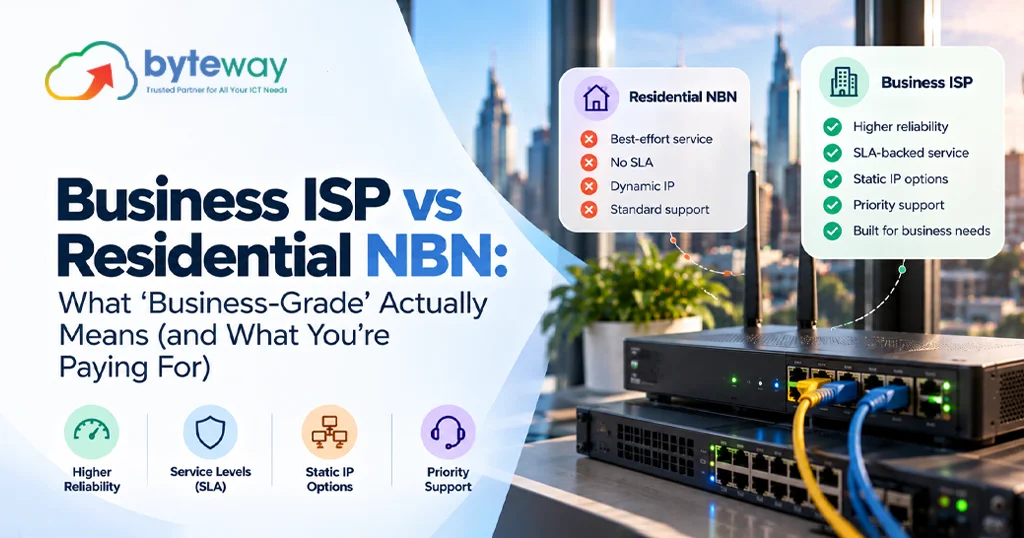
Internet reliability is no longer a background concern for Brisbane franchise owners. It is the engine your entire operation runs on, and when it fails, the damage shows up in your sales figures before your IT team even knows something is wrong. From the EFTPOS terminal that freezes mid-transaction to the VoIP call that drops while a customer is placing an order, poor connectivity silently bleeds revenue out of businesses that could otherwise be thriving. What makes this worse is that most franchise owners assume their current setup is fine until it visibly falls apart. The mistakes that cost the most are not the dramatic ones. They are the quiet, avoidable ones that have been sitting in plain sight for months. Here are five of them. Mistake 1: Running Your Whole Business on a Residential-Grade NBN Plan This is the most common and most expensive mistake franchise owners make. A residential NBN connection looks similar to a business one on paper, especially when the speeds seem adequate. The difference only becomes clear when something goes wrong. Business-grade NBN for business plans come with Service Level Agreements that guarantee restoration timeframes if your connection drops. Residential plans offer no such commitment. You are simply placed in a queue. For a Brisbane franchise doing consistent foot traffic or online orders, a four-hour outage with no guaranteed fix time is not a service disruption. It is a revenue event. Beyond that, residential plans use what is called “best effort” traffic handling, meaning your connection competes with every other household on the same node during peak hours. Business plans use priority data tiers that maintain performance when the network is under strain. If your store slows down at lunchtime, this is likely why. Mistake 2: No Failover Plan When the Connection Drops Most franchise owners have a single internet connection. When it goes down, everything stops. That means no EFTPOS, no cloud POS system, no VoIP calls, and no real-time inventory updates across locations. A single point of failure is not a risk worth carrying in 2026. A 4G failover solution changes this entirely. When your primary NBN connection drops, a cellular backup on a separate network carrier takes over automatically, often within seconds and without any action from your team. The switchover is invisible to customers. Sales continue. Calls continue. The cost of a managed failover setup is typically a fraction of what a single afternoon of downtime costs a busy Brisbane franchise location, which makes it one of the clearest ROI decisions in business IT. Mistake 3: Using VoIP Without the Right Internet Infrastructure Behind It Many franchise businesses have moved to VoIP phone systems expecting cheaper calls and more flexibility, which VoIP absolutely delivers, but only when the underlying internet connection is properly configured to support it. VoIP is highly sensitive to what is called jitter and latency, which are basically small irregularities in how data packets travel across your network. On a congested residential NBN connection, these irregularities are common, and they show up as choppy calls, dropped audio, or calls that disconnect mid-sentence. If your team has started avoiding phone calls or customers are complaining about call quality, the problem is almost certainly not the VoIP platform. It is the internet connection carrying it. Business-grade connections with quality-of-service settings prioritise voice traffic over other data, which is what keeps your calls sounding professional. Mistake 4: Ignoring NBN Downtime Data Until It Becomes a Crisis Brisbane franchise owners running multiple locations often have no centralised visibility into what is happening with their internet connections until a staff member calls to say the system is down. By that point, revenue has already been lost, and the team on the ground is frustrated. Proactive network monitoring changes this dynamic entirely. Rather than finding out about an outage from a panicked employee, your IT support partner gets an alert the moment performance drops, often before it becomes a full outage. Issues can be diagnosed and addressed before customers are ever affected. This is where managed IT services for retail chains earn their value. The monitoring runs around the clock, and the response does not depend on a staff member noticing something is wrong and having the presence of mind to call it in during a busy Saturday shift. Mistake 5: Treating IT Infrastructure as a Cost to Minimise Rather Than an Asset to Invest In This mindset is understandable. Franchise owners are watching margins carefully, and IT infrastructure does not feel like it generates revenue the way stock or staffing does. But poorly managed internet infrastructure costs money in ways that never show up as a single line item. Slow load times on your ordering system reduce transaction throughput. Staff spending time on workarounds for connectivity issues are not serving customers. VoIP calls that drop erode customer confidence. These costs are real, they compound daily, and they are entirely preventable. In 2026, the Australian Government’s ongoing push toward digital infrastructure investment has also raised expectations from customers and supply chain partners alike. Franchise networks that lag on connectivity standards are not just losing sales today. They are building a gap that becomes harder to close the longer it goes unaddressed. What Brisbane Franchise Owners Should Do Now Start by honestly auditing how your team spends its time when technology fails them. How often does the internet drop? How long does it take to restore? What happens to sales during that window? The answers will almost certainly show that the status quo is more expensive than the fix. From there, the conversation becomes straightforward. Business-grade NBN, a 4G failover solution, and properly configured VoIP infrastructure are not luxury items. They are the baseline for running a modern franchise in a city as competitive as Brisbane. Ready to Stop Losing Sales to Avoidable Internet Problems? At Byteway, we work directly with Brisbane franchise owners and retail chains to build internet and IT infrastructure that actually holds up under real operating conditions. That means assessing your current setup honestly,

Blog

Sydney NGOs on Alert: Lessons from Australia’s Latest Cybersecurity Incidents (2026)

Running a not-for-profit in Sydney means you carry a weight most businesses never face: the trust of vulnerable people who depend on your organisation for support. That trust lives in your systems. It lives in client records, donor databases, case notes, and funding documents. And right now, that trust is under threat in ways many NGO leaders have not fully prepared for. The cybersecurity landscape across Australia shifted dramatically in the last twelve months. The Australian Signals Directorate’s most recent annual threat report painted a confronting picture — cyber incidents responded to by the national centre climbed by double digits. At the same time, proactive warnings sent to businesses and organisations jumped by more than 80% compared to the year before. These are not numbers that belong only to large corporations. They belong to any organisation that holds data, including yours. When “We’re Too Small to Target” Becomes the Riskiest Belief an NGO Can Hold There is a persistent myth in the community sector that cybercriminals are only after banks, hospitals, and government agencies. The incidents of 2025 and early 2026 have quietly dismantled that assumption. An Aboriginal community organisation in Australia confirmed a cyber incident after a ransomware group made public claims about accessing their systems. The organisation acted quickly, but the event was a stark reminder — mission-driven organisations are not invisible to attackers. They are often more exposed because they invest less in defences while holding deeply personal client data that carries real value on the dark web. What makes NGOs particularly vulnerable is not a lack of awareness. Most directors and managers understand that cybersecurity matters. The gap is usually in resources, prioritisation, and the absence of a dedicated IT structure that can identify threats before they escalate. When you are managing stretched budgets and staff who wear many hats, NGO data security in Sydney can easily slide down the to-do list until something goes wrong. What the 2025–2026 Threat Landscape Actually Looks Like for Community Organisations The Australian Cyber Security Centre’s data shows that malicious attacks, not accidents or system failures, are behind the majority of reported breaches. Ransomware continues to be a dominant method, and the tactics have grown more sophisticated. Attackers are now using AI to craft phishing emails that look indistinguishable from legitimate communications, from funders, government bodies, or partner organisations. A single staff member clicking the wrong link at the wrong time can hand attackers the keys to everything your organisation holds. Supply chain vulnerabilities have also moved to the front of the conversation. A well-publicised 2025 incident showed how a major organisation’s customer data was compromised not through their own systems, but through a third-party supplier. For NGOs, this means your cloud software providers, payroll platforms, and shared case management tools carry risk that extends directly to your clients. Understanding what sits in your digital supply chain is now a core part of responsible data governance. The data breach 2026 Australia picture is also shaped by a regulatory environment that is becoming less forgiving. The Office of the Australian Information Commissioner recorded over 1,000 notifiable data breach reports in the 2024 period — a 25% rise on the previous year. If your organisation experiences a breach and fails to notify affected individuals within the required timeframe, the legal and reputational consequences can be severe. Five Things Sydney NGOs Can Do Right Now to Reduce Their Exposure The good news is that most cyber incidents targeting organisations like yours are preventable. They do not require expensive enterprise-grade solutions. What they require is structured, consistent action across a handful of areas. 1. Start with your people Phishing remains the most common entry point for attackers. Your staff does not need to become cybersecurity experts; they need to know what a suspicious email looks like, how to verify unusual requests, and who to contact when something feels off. A short, practical training session delivered quarterly does more to protect your organisation than almost any technical tool. 2. Lock down your accounts with multi-factor authentication This single step prevents the vast majority of unauthorised logins, even when passwords are compromised. It costs nothing to implement across most platforms and should be non-negotiable for any account holding client data, financial information, or system access. 3. Back up everything and test those backups Ransomware only has leverage if your data is inaccessible. A reliable backup strategy, stored separately from your main systems and tested regularly, means an attacker’s encryption becomes an inconvenience rather than a catastrophe. Many organisations have backups that have never been tested. Find out now, before you need them. 4. Know what you hold and where it lives A significant portion of Australian cyber incidents in 2025 traced back to digital assets that organisations did not realise they still had — old accounts, forgotten files, shadow systems set up by staff without IT sign-off. In an NGO, this might be a shared drive from a previous project, an outdated donor platform, or a cloud tool someone signed up for on a free trial. Knowing what data you hold, and where it actually lives, is the foundation of any meaningful protection plan. 5. Have a plan for when something goes wrong An incident response plan does not need to be a lengthy document. It needs to answer three questions: who gets called first, what do we do to contain the damage, and how do we communicate with clients and stakeholders. Organisations that respond well to breaches are those that have practised the response before it was needed. The Regulatory Reality NGOs Cannot Afford to Ignore in 2026 Australia’s notifiable data breach scheme requires any organisation covered by the Privacy Act to report eligible breaches to the OAIC and notify affected individuals. For many NGOs receiving government funding or holding health-related data, this obligation applies directly. In 2025, New South Wales also introduced the Identity Protection and Recovery Bill, establishing a fraud-check service and a compromised credential register. Another signal that governments at every level are tightening expectations

Blog

Better Internet Means Better Patient Care in 2026: NBN for Medical Centres in Australia

Running a busy medical centre in Australia today looks nothing like it did even five years ago. Patient records live in the cloud, Medicare claims get processed online in real time, and telehealth consultations have gone from a pandemic workaround to a fully permanent service. Every single one of these things depends on one thing: internet connection. And not just any connection, a proper, business-grade NBN plan built to handle what healthcare demands. If your clinic is still on a residential NBN plan or an outdated connection installed years ago, there is a real chance it is quietly costing you – in dropped telehealth calls, slow system logins, frustrated staff, and compliance risks you may not even be aware of yet. Why 2026 Is a Turning Point for Healthcare Connectivity in Australia This year has brought a noticeable shift in how Australian medical centres are expected to operate digitally. From March 2026, updated Medicare Benefits Schedule (MBS) items were introduced specifically for telehealth support services, allowing GPs and nurse practitioners to support patients during video consultations with specialists. That is a direct signal from the government: telehealth is not slowing down, it is expanding, and clinics need the infrastructure to support it properly. At the same time, bulk billing rates have increased sharply in 2026, with far more clinics now fully bulk billing standard consultations for adult patients compared to just the year before. The clinics absorbing that shift are leaning harder on efficient digital systems, including fast appointment scheduling, smooth Medicare claiming, and cloud-based records, to keep operations running without adding administrative burden. A slow or unstable connection in that environment is not a minor inconvenience. It is a brake on the entire practice. On top of all that, cybersecurity has shot to the top of the agenda for healthcare providers across the country. Patient data is among the most sensitive information that exists, and healthcare has become one of the highest-risk industries for cyber threats. Digital health governance is being treated not just as a compliance checkbox but as a clinical and operational responsibility. If your internet infrastructure is not built with security in mind from the ground up, your clinic is exposed in ways that can carry serious consequences, such as financial, legal, and reputational. What a Medical Centre Actually Needs from an NBN Plan Not every NBN plan is the same, and a residential connection, even a fast one, is not designed for a clinical environment. Here is what separates a basic plan from one that genuinely supports patient care. Symmetrical upload and download speeds This matters more in healthcare than almost any other industry. Uploading CT scans, pathology results, and high-resolution diagnostic files requires strong upload capacity. Regular plans heavily favour download speeds and often bottleneck uploads, which slows down the exact workflows your staff rely on most. Guaranteed service levels Means that when something goes wrong, and occasionally it will, your provider is contractually obligated to fix it within a defined window. Consumer-grade plans offer no such guarantee. For a clinic where a dropped connection can delay a patient consultation or prevent a prescription from being sent, that distinction is significant. Static IP addresses It allows for secure, consistent remote access to your clinical systems and ensures that your telehealth platforms, practice management software, and cloud services can connect reliably without IP-related authentication issues. Failover connectivity This is the safety net that keeps your clinic running if your primary connection drops. A secondary 4G or 5G backup that kicks in automatically means your team keeps working and your patients keep receiving care, even during an outage. If you are weighing up your options and wondering what the right plan structure for a small healthcare business looks like, the short answer is that you need something purpose-built, not repurposed from a normal internet plan. Cybersecurity and Compliance Layer You Cannot Ignore Speed and reliability are only part of the story. In a medical centre, the network carrying your patient data also needs to be actively protected. Australia’s Privacy Act places clear obligations on healthcare providers to secure personal health information, and those obligations have real teeth, particularly as cyber threats targeting healthcare have grown more sophisticated in recent years. A proper business NBN setup for a medical centre should include encrypted connections, firewall protection, secure Wi-Fi segmentation (so that a patient using your waiting room Wi-Fi cannot access your clinical network), and regular monitoring for unusual activity. These are not optional extras. They are the baseline for operating a digitally connected clinic safely and compliantly in 2026. This is where choosing the right provider matters enormously. Not all internet providers think about healthcare the way a specialist does. Byteway offers cybersecurity and compliance-focused services specifically designed for healthcare facilities, meaning you get connectivity that is not just fast, but built around the regulatory environment your clinic actually operates in. Telehealth Is Only as Good as Your Connection It is worth being direct about this: telehealth has become a core part of how Australians access GP care, specialist consultations, and allied health services. Over 1.2 million Australians are already using AI-supported telehealth services, and that number continues to grow. A dropped call halfway through a mental health consultation, or a pixelated video feed during a specialist review, is more than a technical inconvenience; it erodes patient trust and directly affects care quality. HD video consultations require significantly more bandwidth than a standard video call. When you have multiple practitioners running telehealth simultaneously, combined with cloud-based practice management software, real-time Medicare claiming, and administrative staff managing schedules, a residential NBN plan will saturate quickly. The maths is straightforward: business-grade speeds, with dedicated bandwidth, are what keep every consultation smooth. Practical Steps for Medical Centres Reviewing Their Connectivity in 2026 If you are a practice manager or clinic owner thinking about your current setup, here is a sensible way to approach it. Start by honestly assessing what you are running on right now. If it is a regular plan,

Blog

Australia Healthcare Data Laws 2026: Mandatory Data Sharing & What Clinics Must Do Now

If you run a clinic, a pathology service, or any healthcare facility in Australia, 2026 is not the year to be caught off guard. The rules around healthcare data are shifting in a significant way, and what used to be optional is about to become a legal obligation. Understanding what is changing, why it matters, and what your clinic needs to do right now is no longer just good practice; it is the difference between staying compliant and facing real financial penalties. What Is About to Change and Why It Cannot Wait From July 2026, healthcare providers will be required to upload pathology and diagnostic imaging reports by default to My Health Record. This is not a soft recommendation. Under the Health Legislation Amendment (Modernising My Health Record – Sharing by Default) Act 2025, healthcare providers — starting with pathology and diagnostic imaging services — will be legally required to upload specific test results and reports to a patient’s My Health Record. With just a few months left before that deadline, the window to prepare is narrowing fast. The rollout has already begun in stages, and some changes are already live. From March 2026, consumers can immediately view X-ray reports for limbs after upload, while other diagnostic imaging reports are available after a five-day delay, reduced from the previous seven-day delay. The government has made it clear this is only the beginning — the broader goal is to make it easier for healthcare providers to coordinate care, support better clinical decisions, and reduce avoidable hospital admissions and duplicate testing. What makes this particularly important for clinic owners is the penalty structure. Healthcare providers that do not follow the new rules may be required to repay money received for services under the Medicare Benefits Scheme and could face additional penalties on top of that. Why This Is More Than a Tick-Box Exercise Many clinics hear the words “data compliance” and immediately think of paperwork. But the 2026 reforms go far deeper than that. A new conformance profile now applies to all clinical information systems connecting to My Health Record, designed specifically to meet evolving cybersecurity threats, and it includes new mandatory requirements such as the adoption of multi-factor authentication. This means your clinic’s software, your staff access controls, and your overall IT setup all need to be assessed, not just your upload processes. A data breach or failure to meet the new system conformance standards can expose your clinic to serious legal and reputational risks. For many small and mid-sized clinics, this is where the real challenge lies. It is one thing to understand the law. It is another thing to have the IT infrastructure and healthcare IT compliance processes in place to actually meet it before the deadline arrives. What Your Clinic Needs to Do Right Now   Getting compliant does not have to be overwhelming if you approach it with a clear plan. Here is what every Australian clinic should be working through before July 2026. 1. Confirm My Health Record registration If your organisation is not yet registered with My Health Record, this needs to happen immediately. Registration takes time, and leaving it until June is a risk no clinic should be taking. 2. Check your clinical software is conformance ready Your software will need to be capable of uploading to My Health Record. If you are unsure, contact your software provider or secure messaging vendor now to confirm — software updates can take weeks or months to roll out across a practice. 3. Implement multi-factor authentication across all systems With the new conformance profile making MFA mandatory, every staff member accessing clinical systems will need to be properly authenticated. If your clinic has not implemented this yet, it needs to be a top priority in the coming weeks. 4. Train your staff on the rules and exceptions of Healthcare Data There are specific situations where data will not need to be uploaded — for example, if a patient requests their information not be shared, or if a provider has genuine concerns about the patient’s safety or wellbeing. When exceptions apply, providers will be required to keep a record for at least two years. Your team needs to understand both the obligations and the exceptions clearly before July arrives. 5. Apply for an extension if your systems are not ready In certain circumstances, healthcare providers who are unable to comply by July 2026 may be eligible to apply for an extension. Applications opened in early 2026. If your practice is in the middle of a system migration or upgrade, this pathway is worth exploring immediately — do not wait until the deadline has passed. 6. Conduct full IT and cybersecurity review The new laws effectively demand that your IT environment is secure, audit-ready, and capable of handling sensitive health data responsibly. This means reviewing your data storage, access controls, incident response processes, and audit trails well before the deadline. The Bigger Picture: July 2026 Is Just the Start It would be a mistake to treat July 2026 as the finish line. The government is actively exploring ways to expand default sharing to My Health Record beyond pathology and diagnostic imaging, looking at other types of key health information, including medicines, specialist reports, and discharge summaries, to improve continuity of care across health settings. That means the clinics that build strong, compliant, and secure IT foundations now will be in the best position as these requirements continue to expand. The ones that scramble to meet each deadline as it arrives will consistently be playing catch-up, and that carries real business risk every single time. How Byteway Helps Australian Clinics Stay Compliant Meeting the July 2026 deadline involves more moving parts than most clinics expect. From confirming software conformance and rolling out multi-factor authentication to training staff on exception handling and auditing your entire IT environment, the compliance checklist is both technical and time-sensitive. This is exactly where Byteway comes in. We work with healthcare facilities across Australia to assess where your clinic currently

Blog

Why is IT Support Becoming Critical for Aged Care Homes in Geelong? (2026 Insight)

There was a time when aged care homes ran largely on paper, phone calls, and face-to-face coordination. That time is gone. Today, almost every function of a residential aged care facility, from medication management and resident records to incident reporting and family communication portals, runs through a digital system. And when that system goes down, the consequences are not just inconvenient. They can be genuinely dangerous. This is why IT support for aged care has moved from a nice-to-have into a non-negotiable operational requirement, especially here in Geelong, where many facilities are managing ageing infrastructure while trying to keep pace with a rapidly shifting compliance landscape. Aged Care Act 2024 Changed Rules and Your IT Systems Are Part of the Equation Since the new Aged Care Act came into effect in November 2025, aged care providers across Australia have been navigating a much stricter regulatory environment. The old 1997 legislation has been replaced with a rights-based framework that places clear obligations on providers to demonstrate safe, transparent, and high-quality care delivery always. What does that have to do with your IT setup? More than you might think. Under the strengthened Aged Care Quality Standards, providers are now assessed on actual outcomes for residents, not just whether policies exist on paper. That means your incident management system needs to be logging accurately and in real time. Your clinical records platform must be accessible and reliable. Your Serious Incident Response Scheme (SIRS) reporting pathway must function without fail. Every one of these depends on an IT infrastructure that works. When an auditor arrives, or a compliance review is triggered, a system crash or data gap in your records is not a minor inconvenience. It is a compliance failure with real consequences, including civil penalties and registration suspension under the new Act. What Happens When the Systems Go Down in an Aged Care Home? Most aged care managers have experienced it at least once: the software freezes mid-shift, the network drops out, or the medication management system becomes inaccessible. Staff reverts to handwritten notes. Incident reports get delayed. Communication with GPs and families breaks down. And in a high-care residential environment, those gaps create risk. Consider a scenario where a resident with complex medication needs is admitted during a network outage. The care team cannot access the electronic medication administration record. They cannot confirm current prescriptions or allergy flags. They do what they can with manual processes, but the margin for error is far higher than it should be. This is not a hypothetical. It happens in facilities that treat IT as a background function rather than a core operational system. The facilities that avoid these situations are the ones that have proactively managed IT support in place, with monitored networks, regular system health checks, and fast response times when something goes wrong. Why Geelong Aged Care Facilities Face Unique IT Pressures Geelong has seen significant growth in its aged care sector over the past several years, with new facilities opening and existing ones expanding to meet growing demand from an ageing regional population. That growth brings its own IT challenges. Many established facilities in the region are running systems that were set up years ago and have never been properly reviewed or upgraded. Network infrastructure that was adequate for a ten-bed wing is now being stretched across a sixty-bed facility with digital call systems, electronic health records, visitor management portals, and staff communication platforms all running simultaneously. At the same time, the workforce pressures facing aged care homes mean that staff often do not have the time or technical background to manage IT issues themselves. When the Wi-Fi drops on the morning shift, the director of nursing should not be troubleshooting the router. That time and energy belong to the residents. A reliable IT support provider in Geelong who understands the specific demands of healthcare environments takes that burden off your team entirely. Compliance Is No Longer Just a Policy Problem, It Is a Technology Problem One of the clearest shifts that aged care managers are noticing in 2026 is that regulatory compliance now has a direct technology dependency. The data required for SIRS reporting, quality indicator submissions, and accreditation evidence all live inside digital systems. If those systems are unreliable, your compliance record is unreliable. Healthcare IT solutions designed for aged care environments go beyond basic connectivity. They include secure data storage that meets Australian privacy requirements, redundancy planning so systems stay available even when hardware fails, and cybersecurity layers that protect sensitive resident health information from the kinds of threats that are increasingly targeting healthcare organisations. A cyberattack on an aged care home is not just a data breach. It can lock your clinical systems entirely, prevent staff from accessing care records, and leave a facility in a dangerous state of operational blindness. The question is not whether your facility could be targeted. The question is whether your IT environment is resilient enough to recover fast if it is. What Managed IT Support Actually Looks Like in a Residential Aged Care Setting There is a significant difference between having an IT contact you call when something breaks and having a managed IT support partner who proactively monitors your environment. For aged care homes, the latter is the only model that makes sense. With managed IT support, your systems are monitored continuously. Potential issues, whether it is a server running hot, a backup that has not completed, or unusual network activity, are flagged and addressed before they become outages. Your team gets a helpdesk they can call or message when they need assistance, and response times are measured in minutes rather than days. For aged care facilities in Geelong, this means: Network infrastructure sized and maintained for the demands of a residential care environment Secure, compliant data management aligned with the Aged Care Act 2024 requirements Cybersecurity protections appropriate for environments handling sensitive health information IT planning that accounts for future growth and regulatory changes This is not IT support that waits for something

Blog

Why Cybersecurity for Healthcare in Sydney Is Critical After Recent 2026 Attacks

If you run a GP clinic, medical centre, or allied health practice in Sydney, there is a very real question you need to ask yourself right now: when was the last time someone checked whether your patient data is secure? If the honest answer is “not recently,” or worse, “never,” then what is happening across Australia’s healthcare sector in 2026 should be a serious wake-up call. Cyberattacks on Australian healthcare providers have not just increased, but also, they have become relentless. And Sydney-based clinics, regardless of their size, are squarely in the crosshairs. The 2026 Reality: Australian Healthcare Is Under Sustained Attack Earlier this year, a ransomware group targeted an Australian healthcare software provider, raising urgent alarms across hospitals and clinics that shared the same platforms. The incident was not isolated. In early April 2026, a separate threat actor was identified actively exploiting web-facing systems across healthcare providers in Australia, the UK, and the US — using zero-day vulnerabilities that were being weaponised even before public patches were released. What makes this wave of attacks particularly alarming is how they work. Attackers are no longer using exotic malware. They are using the tools already inside your network, such as remote administration utilities, legitimate system scripts, blending in as normal operations for weeks or even months before striking. By the time a breach is detected, the damage is already serious. The Australian Signals Directorate’s 2024–25 Annual Cyber Threat Report confirmed that ransomware incidents in healthcare had doubled compared to the previous year. More chillingly, malicious actors were successful in 95% of all healthcare incidents responded to — compared to a 52% average across all other sectors. Healthcare is not just being targeted. It is being consistently and successfully attacked. Why GP Clinics and Medical Centres Are Prime Targets There is a common misconception that cyber criminals only go after large hospitals or insurers. In reality, non-hospital clinical providers, such as GP clinics, specialist centres, and allied health practices, are the most targeted sub-sector by a significant margin. The reasons are straightforward. Small and mid-sized medical practices hold enormous amounts of sensitive data, including medicare records, mental health notes, prescription histories, contact details, and financial information. Yet many operate with limited IT budgets, outdated software, and no dedicated security team. That combination is exactly what attackers look for. Health information security is not a luxury reserved for large health systems. It is a baseline requirement for any practice that holds patient records. And in Sydney, where digital healthcare adoption has accelerated significantly, the risk is only growing. There is also a compliance dimension that many clinic owners are not fully aware of. Under Australia’s Notifiable Data Breaches (NDB) scheme and the My Health Records Act, healthcare providers have legal obligations to report breaches that are likely to cause serious harm. A failure to notify can result in significant fines from the Office of the Australian Information Commissioner (OAIC). If your systems are compromised and you do not have the monitoring in place to even know about it, that is a compliance and legal liability sitting quietly in your business right now. What a Breach Actually Costs a Sydney Clinic The financial and reputational damage from a cyber breach is rarely understood until it happens. Direct costs include forensic investigation, system restoration, legal fees, and potential regulatory penalties. But indirect costs are often worse and longer-lasting. Patients who learn their records were compromised do not easily forget. Referrals dry up. Staff confidence drops. The community trust that a clinic builds over the years can unravel in days. For smaller practices in competitive Sydney suburbs, reputational damage can be fatal to the business. There is also the operational reality that if your systems go down or become encrypted by ransomware, you may be unable to access patient histories, schedule appointments, or process claims. Every hour of downtime has a direct dollar cost, and restoring systems without prior preparation can take days or weeks. What Sydney Clinics Must Do Right Now The encouraging reality is that most successful attacks exploit preventable weaknesses. The gap is not awareness; it is execution. Here are the steps every Sydney medical practice should be taking today. 1. Get a cybersecurity audit done first Before anything else, you need to know where your vulnerabilities are. A professional audit maps your risks, flags your weakest points, and gives you a prioritised action plan. Without this, any other steps are guesswork. Go with the cybersecurity checklist for healthcare to get a sense of what a thorough review covers. 2. Enable multi-factor authentication across all systems This single step blocks the majority of credential-based attacks. Every staff login, clinical software, email, patient portals, and billing system should require a second verification step. It is not optional anymore. 3. Patch and update everything, including medical devices Attackers scan for known vulnerabilities in unpatched systems. A systematic update schedule for operating systems, practice management software, and any internet-connected medical devices is essential. Outdated systems are open doors. 4. Train your staff regularly Phishing emails remain the most common entry point for healthcare breaches. Staff who know what to look for and who feel empowered to report suspicious messages without fear are one of your strongest defences. Training should happen at least twice a year, not just during onboarding. 5. Back up your data properly and test those consistently Isolated, regularly tested backups are the difference between a serious inconvenience and a catastrophic loss in a ransomware attack. Backups that are connected to your live systems can be encrypted alongside everything else. Offline or cloud-isolated backups are what protect you. 6. Work with a cybersecurity partner who understands healthcare General IT support is not the same as health information security. The compliance requirements, the specific software environments, the patient data obligations — these require a specialist. Working with cybersecurity professionals in Sydney who understand your sector means you are not starting from scratch every time something changes. Regulatory Shift That Clinic Owners Cannot Ignore Australia’s cybersecurity legislative landscape has

Blog

Why Melbourne GP Clinics Are Adopting AI Receptionists in 2026 (Healthcare Trend Guide)

Walk into most Melbourne smart GP clinics today, and you might notice something different. The phone is still ringing, but no rushed receptionist is scrambling to answer it. Instead, a calm and articulate AI voice picks up within seconds, books the appointment, and moves on to the next caller. This is not a glimpse into the future anymore; it is already happening across Australia, and the shift is gathering pace faster than most clinic owners expected. So, what is driving this change, and more importantly, what does it actually mean for your practice? The Real Pressure Melbourne GP Clinics Are Facing Right Now Running a GP clinic in Melbourne has never been straightforward, but the last couple of years have made the front desk feel like the most overwhelming part of the operation. Patient volumes keep climbing, staffing costs are rising, and somewhere in between answering calls, managing no-shows, and juggling walk-ins, the receptionist is also expected to smile and keep patients calm. The numbers back this up. AI and healthcare analysts have found that voice agents can offload up to 70 percent of front desk call volume in a typical clinic setting. That is not a small relief — for a busy GP practice fielding 80 to 120 calls a day, that figure translates into real hours given back to staff and real money saved on overtime or hiring. But the problem is not just volume. It is availability. Patients call after hours. They call on weekends. They call during the lunch break when everyone has stepped away from the desk. Every missed call is a missed booking, and sometimes, it is a patient who simply goes elsewhere. What an AI Receptionist Actually Does in a GP Setting There is a lot of noise around AI in healthcare right now. And it is worth cutting through it to understand what an AI receptionist for GP clinics handles day-to-day. At its core, a well-built AI receptionist in a GP clinic will answer every inbound call instantly, book or reschedule appointments directly into the practice management system, handle common patient questions, send confirmation messages, and flag urgent calls to human staff. The best systems do all of this in natural, conversational language with Australian-accented speech that feels familiar to patients rather than robotic or off-putting. What makes this particularly useful in a Melbourne context is that many solutions on the market right now integrate directly with practice management software already common in Australian GP clinics. Meaning, setup is less disruptive than most practice managers assume going in. Beyond calls, AI and health integration tools are also helping clinics with automated patient outreach, follow-up communications, and administrative document handling, tasks that used to consume several hours of staff time every single day. The Regulatory Landscape in Australia Has Quietly Shifted One thing that has given Melbourne clinic owners more confidence to adopt these tools in 2026 is a clearer regulatory picture. In February 2026, Australia’s Therapeutic Goods Administration released updated guidance clarifying exactly when AI software in healthcare falls under medical device regulation. The key takeaway for GP clinic owners is reassuring: an AI receptionist handling appointment bookings, patient calls, and general enquiries does not classify as a medical device under the TGA framework if it is not involved in clinical decision-making or diagnosis. This distinction matters. It means clinics can adopt AI receptionist technology without the compliance burden attached to regulated clinical AI tools, provided the solution is purpose-built for administrative functions. The guidance also reinforces that patient data handling must still comply with Australia’s Privacy Act principles, which any reputable provider in this space should already be building to. For clinic owners who were watching from the sidelines waiting for regulatory clarity, this update has effectively removed one of the last hesitations from the decision. 5 Reasons Melbourne GP Clinics Are Making the Switch 1.    Staffing costs are no longer sustainable at scale: Hiring and retaining quality reception staff in Melbourne is expensive and time-consuming. An AI receptionist operates around the clock without sick days, lunch breaks, or turnover costs. Clinics that have made the switch are reporting front desk operational savings ranging from 35 to 60 percent, which, for a mid-sized practice, adds up to a meaningful annual figure. 2.    No-show rates drop when follow-ups are automated: Missed appointments are one of the most persistent revenue leaks in GP practices. When confirmations and reminders go out automatically, and patients can reschedule via a quick voice interaction, no-show rates fall noticeably. Timely communication directly supports better patient adherence and fewer wasted appointment slots. 3.    After-hours availability becomes a competitive edge: A patient who cannot reach your clinic at 6 pm on a Friday will book with a clinic that can accommodate them. An AI receptionist gives smaller Melbourne practices the same availability as larger corporate health groups without requiring shift staff or after-hours contracts. 4.    Your human team can do more meaningful work: Reception staff who spend less time answering repetitive calls spend more time supporting clinical care, managing complex patient needs, and improving the in-clinic experience. The technology is not about replacing people, it is about redirecting their energy where it matters. 5.    Integration with existing systems has become seamless: Early concerns about AI tools creating new IT headaches have largely been addressed by providers who have built their platforms specifically around Australian practice management systems. For practice managers already thinking about the broader picture, exploring an AI voice assistant for your business is now a far smoother process than it was even 18 months ago, with solutions built specifically around Australian practice environments. What Melbourne Clinics Should Look for Before Choosing a Solution Not every AI receptionist on the market is built the same way, and the wrong choice can create more problems than it solves. Here is what to check before committing. First, confirm the solution integrates natively with your practice management software rather than requiring a workaround or manual export. Second, verify that the provider has a

service-by-area

Understanding AI & Cloud Security Risks in Australia: 7 Insights for Businesses in 2026

Running a business today means relying on cloud platforms, connected devices, and increasingly, AI tools. That mix brings serious power, but it also brings risk. As technology becomes more embedded in daily operations, so does the responsibility to protect the data and systems that keep everything running. Australia is not standing still on this front. New laws, updated compliance frameworks, and growing government scrutiny are reshaping what it means to operate securely. Whether you manage a small office or a growing enterprise, understanding the current landscape is no longer optional; it is part of doing business responsibly. Here are seven insights every Australian business should know heading into 2026. 1. Cloud Misconfiguration Remains the Biggest Threat Most cloud breaches do not happen because hackers outsmarted sophisticated defences. They happen because a storage bucket was left open, permissions were set too broadly, or a default setting was never changed. Misconfiguration is quietly the leading cause of cloud data exposure, affecting businesses of all sizes. Reviewing access settings, enabling multi-factor authentication, and auditing who has access to what should be on every business’s regular checklist. If you have not done a cybersecurity check for your business recently, that is the right place to start. 2. AI Tools Introduce New Data Privacy Questions Businesses across Australia are adopting AI tools for customer support, reporting, and automation at a rapid pace. What many overlook is that these tools often process sensitive data, such as customer records, financial information, internal communications, and others. The Australian government has made responsible AI adoption a clear national priority in 2026, including the establishment of an AI Safety Institute and ongoing legal updates to address AI-related risks. For businesses, this means the question is not just “does the AI tool work?” but also “where does our data go, and who can access it?” Understanding the data handling practices behind any AI platform you use is now a baseline responsibility. 3. CCTV and Surveillance Systems Are a Compliance Area, Not Just a Security Tool Many businesses install CCTV as a basic security measure and then give it little further thought. Under the Privacy Act, however, it is much more than a physical security decision. According to the Office of the Australian Information Commissioner, organisations using surveillance systems must inform people that monitoring is taking place, handle recorded footage securely, and comply with workplace surveillance laws. This applies to cloud-connected CCTV systems, where footage is stored remotely. Knowing where that footage lives, who has access, and how long it is retained are questions your business needs to be able to answer. 4. IoT Devices Are the Overlooked Entry Point Smart thermostats, connected printers, networked security cameras, and door access systems are some examples of internet-connected devices in a typical office grows every year. Each one is a potential entry point for attackers, and many were never designed with strong cloud security in mind. Australia’s Cyber Security Act, which came into force in 2024 and continues to shape expectations through 2026, signals that connected devices need to meet clear security standards. Businesses are expected to treat IoT devices as part of their broader cybersecurity posture, not as separate from it. That means keeping firmware updated, placing devices on separate network segments where possible, and auditing what is connected to your network. 5. Third-Party Cloud Vendors Do Not Absorb Your Compliance Risk This is a point many businesses get wrong. When you move data to a cloud platform, the operational convenience is real, but your compliance obligations do not transfer. You remain responsible for how customer and employee data is handled, regardless of who is storing it. That means reviewing vendor agreements to understand the shared responsibility model, confirming where data is physically stored (Australian data sovereignty matters in certain industries), and ensuring your contracts reflect the cloud security standards you are legally required to meet. 6. Staff Behaviour Is Still the Most Exploited Vulnerability Phishing emails, credential theft, and social engineering continue to cause more security incidents than technical vulnerabilities. The reason is straightforward: it is far easier to trick a person than to break through a properly configured system. Regular staff training does not need to be lengthy or expensive. Teaching employees to recognise suspicious emails, avoid reusing passwords, and report unusual activity goes a long way. Pairing training with simple technical measures like strong cybersecurity practices for your team makes the combination far more effective than either alone. 7. Having a Response Plan Is Now Part of Responsible Operations Many businesses invest in prevention and almost nothing in preparation for when something goes wrong. Under Australia’s Notifiable Data Breaches scheme, if your business experiences a data breach involving personal information, you have reporting obligations. Not having a clear plan slows down your response and increases your legal exposure. A basic incident response plan does not need to be complex. It should cover who is responsible for managing a breach, how you will notify affected individuals, and how you will contact the relevant authorities. Reviewing and testing that plan once a year keeps it practical rather than theoretical. Where to Go From Here AI and cloud security risks are not going away, and in Australia, the regulatory environment around them is becoming more defined. The businesses that manage this well are not necessarily the ones with the biggest budgets — they are the ones that treat security as an ongoing practice rather than a one-time project. If you are unsure where your business stands, a straightforward place to begin is a review of your current setup. Find out how Byteway can help your business stay secure and compliant in 2026 and beyond. Or book your free assessment today with Byteway. No obligations, just clarity on where your business stands. Frequently Asked Questions What is the biggest cloud security risk for Australian businesses in 2026? Cloud misconfiguration remains the leading cause of data exposure. Poorly set access permissions, unmonitored storage systems, and unchanged default settings are the most common culprits — and they affect businesses of every size.

Blog

Secure AI Voice Agent Adoption: 7 Step Practical Guide for Aussie Small Businesses

Running a small business means taking on every responsibility the day throws at you. You answer calls, follow up on leads, handle bookings, and somehow still find time to do the actual work. That is where an AI voice agent can change things for you, but only if you set it up the right way. Because here is the thing. The Australian government is actively pushing businesses to embrace AI, but with a clear message attached: responsible adoption matters. That means you cannot just plug in any voice tool and call it a day. There are privacy laws to follow, data safeguards to put in place, and real risks if you get it wrong. The good news is that doing this properly is not complicated; it just takes a clear plan. This guide gives you exactly that. Step 1: Understand What an AI Voice Agent Actually Does (and Does Not Do) Before anything else, get clear on what you are buying into. An AI voice agent is software that handles spoken conversations with your customers, such as answering calls, qualifying leads, booking appointments, or routing enquiries, without a human on the line. What it is not: a magic fix for poor customer service, a replacement for your entire team, or something that runs itself without oversight. Setting realistic expectations from day one saves a lot of headaches later. Step 2: Map Out Which Business Tasks You Want to Automate Do not automate everything at once. Pick the two or three phone interactions that eat most of your time. Common ones for Aussie small businesses include after-hours call answering, appointment reminders, and basic FAQ handling. Write them down. For each one, note what information the caller typically needs and what you need from them. This becomes the blueprint for configuring your AI receptionist. Step 3: Check Your Privacy Act Obligations Before You Touch Anything This step is non-negotiable. Under the Privacy Act 1988 and the Australian Privacy Principles, any system that collects, stores, or processes customer voice data and an AI calling agent absolutely must handle that data transparently and securely. That means your customers need to know their call may be handled or recorded by an AI system. You need to have a clear privacy policy in place. And you must ensure the tool you choose does not misuse or resell the data it gathers. Non-compliance does not just create legal exposure; it damages the trust you have spent years building with your customers. When evaluating any AI voice agent solution in Australia, ask the vendor directly where your data is stored, how long it is retained, and whether they comply with Australian data laws. Step 4: Choose a Vendor with Transparency at Its Core Not all AI voice tools are created equal, and a worrying number are not built with Australian compliance in mind. Look for vendors who are upfront about their data handling practices, who can provide documentation on their security measures, and who offer Australian-based (or at a minimum compliant offshore) data storage. Be cautious of any provider that cannot clearly answer your questions about privacy. In a market where AI scams and misleading tools are on the rise, doing your homework here protects both you and your customers. Step 5: Set Up a Test Environment Before Going Live One of the biggest mistakes small business owners make is flipping the switch and immediately putting an untested AI agent in front of real customers. Run it in a controlled environment first. Call it yourself. Have a staff member or trusted friend call it. Test edge cases, for example, what happens when the caller asks something unexpected, gets frustrated, or wants to speak to a human? Every gap you find now is one your customers will not stumble into later. Document what needs tweaking and fix it before launch. This step alone will save you from a flood of complaints in the first week. Step 6: Train Your Team and Set Clear Escalation Paths Your AI voice agent handles the volume; your team handles the nuance. Make sure your staff understands how the system works, what kinds of calls it manages, and when a conversation gets handed over to a real person. This escalation path matters more than most business owners realise. The Australian government’s push for responsible AI specifically highlights the importance of human oversight — particularly when AI systems are making or influencing decisions that affect customers. Keeping humans in the loop for sensitive interactions is not just best practice; it is where the law is clearly heading. Step 7: Monitor, Review, and Stay Compliant Ongoing Set up a monthly review habit. Listen to a sample of calls. Check that the agent is handling conversations the way you intended. Look at where callers are dropping off or getting confused and update the script accordingly. Stay across any changes to Australian AI regulation, as this space is moving fast. The federal government has flagged ongoing legal updates to manage AI-related risks, including the establishment of an AI Safety Institute. What you set up today may need adjustment as the regulatory framework matures. If this all sounds like a lot to manage alongside actually running your business, that is exactly where a trusted local partner helps. Visit Byteway to explore how we help Australian small businesses adopt AI tools the right way — safely, compliantly, and without the tech overwhelm. Ready to Get Started? Setting up a secure AI voice agent does not have to be a solo project. Whether you are just exploring your options or ready to implement, our team is here to help you move forward with confidence. Connect with our team to understand it in-depth.   Frequently Asked Questions What is an AI voice agent and how does it work for small businesses? It is software that handles phone calls using AI, like answering questions, booking appointments, and transferring to a human when needed. No rigid menus, just natural conversation. Is an AI voice agent legal to use in

Guide for SMBs to Prevent Data Breaches
Blog

How Australian SMBs Can Prevent Data Breaches Without a Big Budget (2026 Guide)

If you run a small or medium-sized business in Australia, the words “data breach” probably trigger a quiet dread. Everyone knows it’s a real threat, but between managing staff, chasing invoices, and keeping customers happy, cybersecurity often slides down the priority list. And honestly? That’s completely understandable. But here’s what’s harder to ignore: the threat landscape in 2026 is not giving small businesses a free pass. Earlier this year, a cyberattack on a finance technology platform exposed the personal data of over 440,000 Australians. And it includes government IDs, addresses, phone numbers, and financial records, all of which were compromised. And hundreds of small brokerages were caught in the fallout. Around the same time, a separate incident hit government schools in Victoria, where student names, emails, and school information were exposed, triggering a formal privacy investigation. These aren’t isolated stories. They’re a signal. The good news? You don’t need an enterprise IT budget to protect your business. You just need a clear plan and the right habits in place. Biggest Mistake SMBs Make with Cybersecurity Most small business owners assume they’re too small to be a target. That assumption is exactly what makes them attractive. Cybercriminals don’t always go after the big fish; they go after the easiest entry point. And a small business with weak passwords, no multi-factor authentication, and outdated software is an open door. The damage from a data breach goes well beyond fixing the technical problem. You’re looking at regulatory penalties under the Australian Privacy Act, potential notification obligations, loss of customer trust, and reputational harm that’s incredibly hard to undo. For a small business, that’s not just a bad week — it can be the end of the road. 5 Practical Steps to Protect Your Business Without Breaking the Bank The following steps aren’t complex. They don’t require a full-time IT team. What they require is consistency and a decision to treat security as part of how you operate, not a one-off task. 1. Lock down access with strong passwords and multi-factor authentication Weak passwords remain one of the most common entry points for attackers. Across all business accounts, including email, accounting software, cloud storage, and client portals, use unique, complex passwords and store them in a reputable password manager. More importantly, turn on multi-factor authentication (MFA) wherever it’s available. This one step alone can stop many credential-based attacks. 2. Keep everything updated Outdated software is a welcome mat for hackers. This includes your operating system, browsers, accounting tools, antivirus software, and any other applications your team uses. Enable automatic updates where possible. If you’re running older machines that can no longer receive security patches, it’s worth having a conversation about whether the risk of keeping them outweighs the cost of replacing them. 3. Back up your data and test the backups A reliable backup doesn’t just protect you from ransomware. It protects you from hardware failure, accidental deletion, and supply chain disruptions too. Follow the 3-2-1 rule: keep three copies of your data, on two different types of storage, with one copy stored offsite or in the cloud. Critically, test your restore process regularly. A backup you’ve never tested is a backup you can’t trust. 4. Train your team to spot phishing Phishing emails are still the most common way attackers get inside a business. They’ve also become significantly more convincing. Run short, regular training sessions with your staff — not a once-a-year tick-box exercise, but genuine conversations about what to look for. Teach them to verify unexpected requests, especially those involving payments, password resets, or shared links. One well-trained employee can stop a breach before it starts. 5. Set up a basic firewall and review who has access to what A firewall (whether hardware-based or software-based) provides a critical layer of defence between your internal network and the outside world. Beyond that, take stock of who in your business has access to sensitive data. Apply the principle of least privilege: people should only have access to what they genuinely need to do their job. When staff leave, revoke their access immediately. Where to Start if You’re Feeling Overwhelmed If you’ve read through the above and aren’t sure where to begin, start with the cybersecurity checklist for SMBs — it’s a straightforward resource designed specifically for Australian small businesses and gives you a clear sense of what to prioritise first. The truth is that most breaches aren’t the result of sophisticated, Hollywood-style hacking. They happen because of a missed update, a reused password, or a staff member clicking a link they shouldn’t have. These are fixable problems. They just require attention. Cybercrime in Australia has grown year on year, and 2026 is shaping up to be no different. But the businesses that take even modest, consistent steps to protect themselves are far less likely to end up as a statistic. Final Thought You don’t have to solve everything at once. Pick one item from this list and implement it this week. Then do the next one. Over time, those small habits compound into a genuinely more resilient business — one where your customers’ data, and your own, is far better protected. If you’d like help figuring out where your business stands right now, get in touch with the Byteway team — we work with Australian SMBs every day to make security practical, not overwhelming. We’re serving businesses across Australia — find us here. Frequently Asked Questions What is a data breach? It’s when someone accesses or exposes personal information without permission — through hacking, human error, or lost devices. It can impact any business, big or small, across any industry. Do small businesses in Australia have to report a data breach? The NDB scheme applies to businesses with an annual turnover of more than $3 million, credit reporting bodies, and health service providers. What causes most data breaches in Australian businesses? The three main causes are malicious cyberattacks, human error, and system or software failures. What’s the single most effective way to prevent a data breach? Enabling multi-factor authentication

Scroll to Top