

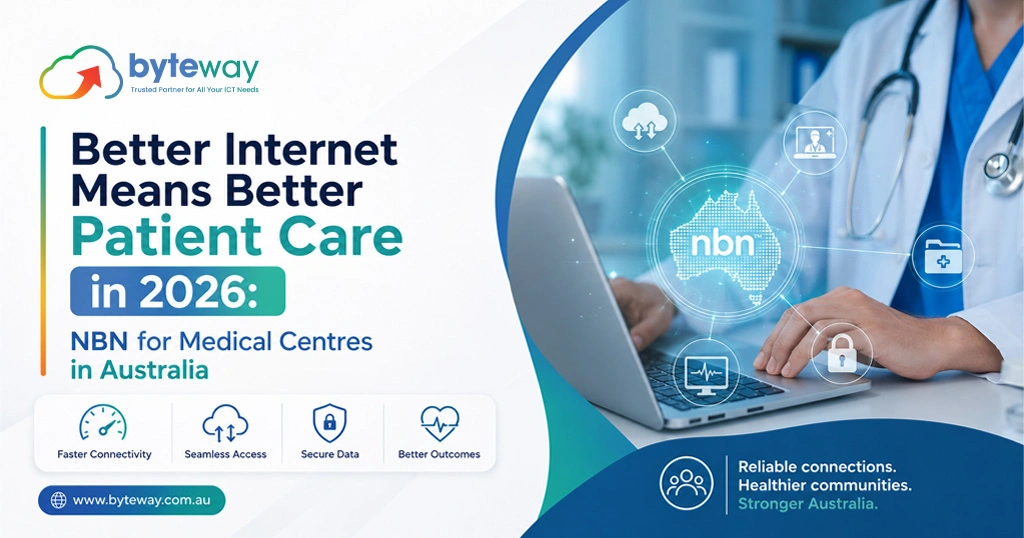
Byteway sets up and manages business internet for Australian medical centres, and in 2026 the link between connectivity and care has never been clearer. Telehealth, cloud clinical software, and the new rules pushing more data into My Health Record all depend on a connection that is fast, reliable and secure. For a modern clinic, the internet is no longer plumbing in the background. It is part of how care gets delivered.
Medical centres now rely on the internet for telehealth, cloud-based clinical systems, online claiming, and uploading pathology and imaging to My Health Record under the 2026 Share by Default rules. A slow or unreliable connection means dropped video consults, laggy patient records and stalled uploads, all of which affect care. The right business-grade connection, with a reliable service, adequate upload speed and a backup path, keeps a clinic running when patients depend on it.
Why internet reliability now shapes care?
A decade ago a clinic’s internet mattered for email and claiming. Today it underpins the clinical day:
- Telehealth. Video consults need stable, symmetrical bandwidth. A dropped consult is a disrupted appointment and a frustrated patient.
- Cloud clinical software. More practice management and clinical systems run in the cloud. If the connection drops, the clinic effectively stops.
- My Health Record and Share by Default. From 1 July 2026, more pathology and imaging is uploaded to My Health Record by default, which means more data moving out of the clinic, so upload reliability matters, not just download.
- Online claiming and bookings. Medicare claiming, online bookings and reminders all depend on the connection being up.
When the internet is slow or down, none of this works, and the impact lands on patients.
Business NBN, fibre, and why the connection type matters
Not all connections are equal, and the difference matters for a clinic. Business NBN suits many practices, but the underlying technology counts: older copper-based connections are less reliable and are being retired, while full fibre is faster and more dependable. We explain the difference in our guide to connection types for business, and it is worth understanding, beying avoidable risk.
For practices that genuinely cannot tolerate downtime, dedicated fibre offers a higher-grade connection with a service level agreement and guaranteed performance. And a mobile backup connection can keep a clinic online if the main link fails, which for telehealth and cloud systems can be the difference between a normal day and a closed one.
Security comes with the connectivity
More data moving in and out of a clinic raises the security stakes. A medical centre is a prime target for attackers, and the connection is part of the attack surface. Business-grade connectivity should sit behind proper security, a business firewall, secure remote access and monitoring, not a consumer router. Connectivity and cyber security are two halves of the same job.
Byteway Expert Insight
The clinics that feel this most are the ones that grew into telehealth and cloud systems on a connection that was never upgraded to match. They added video consults, moved their clinical software to the cloud, and started uploading more to My Health Record, all on the same internet plan they had when the practice mostly did email. Then the consults drop, the records lag, and reception spends the morning apologising. The fix is rarely dramatic: the right connection type, enough upload capacity, a backup path, and proper security around it. For a clinic, that is not an IT upgrade so much as removing a daily source of friction from patient care.
How Byteway helps
- We review your clinic’s connection against how you actually use it: telehealth, cloud systems, uploads.
- We recommend and set up the right Business NBN or dedicated fibre, with a backup path where it matters.
- We secure it and connect it to your managed IT, so the whole setup is reliable and protected.
FAQs
What internet speed does a medical centre need?
Enough to run telehealth, cloud clinical software and uploads smoothly, with adequate upload as well as download speed. The right figure depends on your size and usage; a business-grade connection with a backup path is the practical baseline.
Why does upload speed matter for a clinic?
Because telehealth video and uploading pathology and imaging to My Health Record send data out, not just in. Older connections often have weak upload, which causes dropped consults and slow uploads.
Is Business NBN enough, or do I need dedicated fibre?
Business NBN suits many clinics. Practices that cannot tolerate any downtime, or need guaranteed performance, may prefer dedicated fibre with a service level agreement. A connectivity review determines the right fit.
How does Share by Default affect our internet needs?
From 1 July 2026 more pathology and imaging is uploaded to My Health Record by default, increasing outbound data. Reliable upload capacity matters more than before.
What happens to my clinic if the internet goes down?
Cloud clinical systems, telehealth, claiming and bookings can all stop. A backup connection keeps the clinic running through an outage, which is why it’s worth having for a practice that depends on being online.
Is our clinic internet a security risk?
It can be if it sits behind a consumer router with no monitoring. Business-grade connectivity should be paired with a proper firewall, secure remote access and monitoring, especially given healthcare is a top attack target.
Key takeaways
- Telehealth, cloud systems and My Health Record uploads make reliable internet part of patient care.
- Upload reliability matters more in 2026 as Share by Default pushes more data out of the clinic.
- Connection type matters: ageing copper is a risk; full fibre and a backup path are safer.
- Connectivity and security are two halves of one job for a clinic.
Give your clinic the connection patient care depends on
Byteway helps Australian medical centres get connectivity that keeps care running, and keeps it secure. Book a medical centre connectivity review. 👉 Book your review