
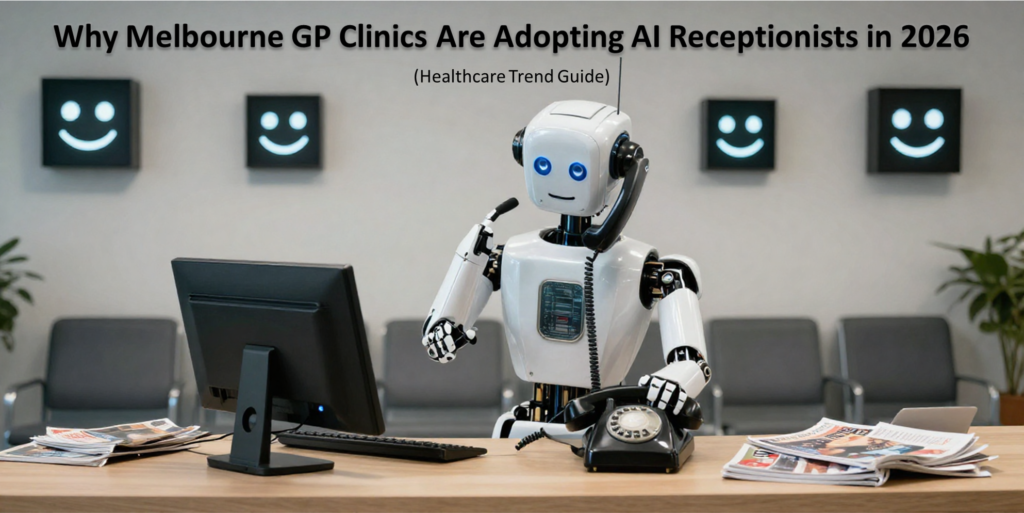
Walk into most Melbourne smart GP clinics today, and you might notice something different. The phone is still ringing, but no rushed receptionist is scrambling to answer it. Instead, a calm and articulate AI voice picks up within seconds, books the appointment, and moves on to the next caller. This is not a glimpse into the future anymore; it is already happening across Australia, and the shift is gathering pace faster than most clinic owners expected.
So, what is driving this change, and more importantly, what does it actually mean for your practice?
The Real Pressure Melbourne GP Clinics Are Facing Right Now
Running a GP clinic in Melbourne has never been straightforward, but the last couple of years have made the front desk feel like the most overwhelming part of the operation. Patient volumes keep climbing, staffing costs are rising, and somewhere in between answering calls, managing no-shows, and juggling walk-ins, the receptionist is also expected to smile and keep patients calm.
The numbers back this up. AI and healthcare analysts have found that voice agents can offload up to 70 percent of front desk call volume in a typical clinic setting. That is not a small relief — for a busy GP practice fielding 80 to 120 calls a day, that figure translates into real hours given back to staff and real money saved on overtime or hiring.
But the problem is not just volume. It is availability. Patients call after hours. They call on weekends. They call during the lunch break when everyone has stepped away from the desk. Every missed call is a missed booking, and sometimes, it is a patient who simply goes elsewhere.
What an AI Receptionist Actually Does in a GP Setting
There is a lot of noise around AI in healthcare right now. And it is worth cutting through it to understand what an AI receptionist for GP clinics handles day-to-day.
At its core, a well-built AI receptionist in a GP clinic will answer every inbound call instantly, book or reschedule appointments directly into the practice management system, handle common patient questions, send confirmation messages, and flag urgent calls to human staff. The best systems do all of this in natural, conversational language with Australian-accented speech that feels familiar to patients rather than robotic or off-putting.
What makes this particularly useful in a Melbourne context is that many solutions on the market right now integrate directly with practice management software already common in Australian GP clinics. Meaning, setup is less disruptive than most practice managers assume going in.
Beyond calls, AI and health integration tools are also helping clinics with automated patient outreach, follow-up communications, and administrative document handling, tasks that used to consume several hours of staff time every single day.
The Regulatory Landscape in Australia Has Quietly Shifted
One thing that has given Melbourne clinic owners more confidence to adopt these tools in 2026 is a clearer regulatory picture.
In February 2026, Australia’s Therapeutic Goods Administration released updated guidance clarifying exactly when AI software in healthcare falls under medical device regulation.
The key takeaway for GP clinic owners is reassuring: an AI receptionist handling appointment bookings, patient calls, and general enquiries does not classify as a medical device under the TGA framework if it is not involved in clinical decision-making or diagnosis.
This distinction matters. It means clinics can adopt AI receptionist technology without the compliance burden attached to regulated clinical AI tools, provided the solution is purpose-built for administrative functions. The guidance also reinforces that patient data handling must still comply with Australia’s Privacy Act principles, which any reputable provider in this space should already be building to.
For clinic owners who were watching from the sidelines waiting for regulatory clarity, this update has effectively removed one of the last hesitations from the decision.
5 Reasons Melbourne GP Clinics Are Making the Switch
1. Staffing costs are no longer sustainable at scale:
Hiring and retaining quality reception staff in Melbourne is expensive and time-consuming. An AI receptionist operates around the clock without sick days, lunch breaks, or turnover costs. Clinics that have made the switch are reporting front desk operational savings ranging from 35 to 60 percent, which, for a mid-sized practice, adds up to a meaningful annual figure.
2. No-show rates drop when follow-ups are automated:
Missed appointments are one of the most persistent revenue leaks in GP practices. When confirmations and reminders go out automatically, and patients can reschedule via a quick voice interaction, no-show rates fall noticeably. Timely communication directly supports better patient adherence and fewer wasted appointment slots.
3. After-hours availability becomes a competitive edge:
A patient who cannot reach your clinic at 6 pm on a Friday will book with a clinic that can accommodate them. An AI receptionist gives smaller Melbourne practices the same availability as larger corporate health groups without requiring shift staff or after-hours contracts.
4. Your human team can do more meaningful work:
Reception staff who spend less time answering repetitive calls spend more time supporting clinical care, managing complex patient needs, and improving the in-clinic experience. The technology is not about replacing people, it is about redirecting their energy where it matters.
5. Integration with existing systems has become seamless:
Early concerns about AI tools creating new IT headaches have largely been addressed by providers who have built their platforms specifically around Australian practice management systems. For practice managers already thinking about the broader picture, exploring an AI voice assistant for your business is now a far smoother process than it was even 18 months ago, with solutions built specifically around Australian practice environments.
What Melbourne Clinics Should Look for Before Choosing a Solution
Not every AI receptionist on the market is built the same way, and the wrong choice can create more problems than it solves. Here is what to check before committing.
First, confirm the solution integrates natively with your practice management software rather than requiring a workaround or manual export. Second, verify that the provider has a clear privacy policy aligned with Australian Privacy Principles, since patient data is always involved. Third, look for a system that allows your team to review call recordings and booking activity through a management dashboard — transparency and oversight matter, especially when something goes wrong.
Finally, ask whether the provider offers local support. A Melbourne GP clinic dealing with a technical issue at 8 am on a Monday morning needs a support team that is awake and responsive, not a helpdesk operating in a different time zone.
The Trend Is Only Moving in One Direction
Australia’s healthcare sector has reduced clinical administrative burdens by up to 45 percent through AI integration, saving practitioners an average of 12 hours weekly. That figure is going to keep climbing as more solutions mature, more integrations are built, and more Melbourne clinic owners see firsthand what peers in their networks are reporting.
The AI receptionist is not a futuristic concept or an experiment. In 2026, it is a practical operational decision that growing numbers of GP clinics across Melbourne are making simply because the numbers make sense and the patient experience improves.
If you are a clinic owner or practice manager ready to explore what this looks like for your specific setup, get in touch with the team at Byteway to talk through the right approach for your clinic and your technology environment.
Thinking about your clinic’s broader digital infrastructure? Find us in Melbourne and connect with the Byteway team locally.
Frequently Asked Questions
What does an AI receptionist do in a GP clinic?
It answers calls 24/7, books appointments, sends reminders, handles common patient enquiries, and transfers urgent calls to your human staff.
Is an AI receptionist compliant with Australian privacy laws?
Yes. Reputable solutions comply with the Privacy Act 1988 and store patient data in Australian data centres in line with Australian Privacy Principles.
Will an AI receptionist replace my existing reception staff?
No. It handles repetitive call volume so your team can focus on patients at the desk and tasks that genuinely need a human touch.
Does an AI receptionist work with Australian practice management software?
Yes. Most solutions integrate directly with common Australian practice management platforms, syncing bookings and availability in real time.
Is AI in GP clinics regulated by the TGA in Australia?
AI is used only for admin tasks, like booking, which is not a medical device under TGA rules. Only AI that influences clinical decisions requires TGA oversight.
How quickly can a GP clinic set up an AI receptionist?
Most Melbourne clinics are live within two to four weeks. Providers handle the configuration, so practice managers do not need to manage the setup.